Bariatric Surgery in Delhi & Greater Noida Weight Loss & Metabolic Care
Comprehensive surgical care for obesity and obesity-related health conditions with personalized evaluation, minimally invasive techniques and long-term weight management support.
Bariatric and metabolic surgery consultations in Delhi, Greater Noida and Greater Noida West.
Bariatric Surgery for Sustainable Weight Management
Bariatric surgery, also called metabolic surgery, is a treatment option for selected patients with obesity when lifestyle and medical management alone have not achieved adequate or durable results.
What Is Bariatric Surgery?
Bariatric surgery changes the size and/or pathway of the digestive system to help reduce food intake and, depending on the procedure, alter nutrient absorption and metabolic signals.
The most commonly performed procedures include sleeve gastrectomy and gastric bypass. The appropriate operation depends on the patient's health, BMI, eating patterns, medical conditions and long-term treatment goals.
Why Consider Metabolic Surgery?
Obesity can be associated with type 2 diabetes, hypertension, fatty liver disease, sleep apnea, joint problems and other health conditions.
For appropriately selected patients, bariatric surgery can provide substantial and durable weight loss and may improve several obesity-related metabolic conditions.
How Obesity Can Affect Your Health
Obesity is a chronic health condition that can affect multiple organs and may reduce quality of life.
Type 2 Diabetes
Excess body weight can contribute to insulin resistance and make blood sugar control more difficult.
High Blood Pressure
Obesity is associated with increased cardiovascular risk and hypertension.
Fatty Liver
Excess weight can be associated with fatty liver disease and other metabolic liver problems.
Sleep Apnea
Obesity can increase the risk of obstructive sleep apnea and sleep-related breathing problems.
Joint Problems
Increased body weight can place additional stress on the knees, hips and other weight-bearing joints.
Reduced Quality of Life
Obesity may affect mobility, physical activity and everyday quality of life.
Comprehensive Obesity & Weight Management
Treatment should be individualized according to BMI, associated medical conditions, previous weight-loss attempts and overall health.
Lifestyle & Nutrition Management
Healthy eating, regular physical activity, sleep, behavioural changes and structured weight-management support remain important components of obesity care.
Medical Weight Loss
Selected patients may benefit from physician-supervised anti-obesity medications together with nutrition, physical activity and ongoing monitoring.
Sleeve Gastrectomy
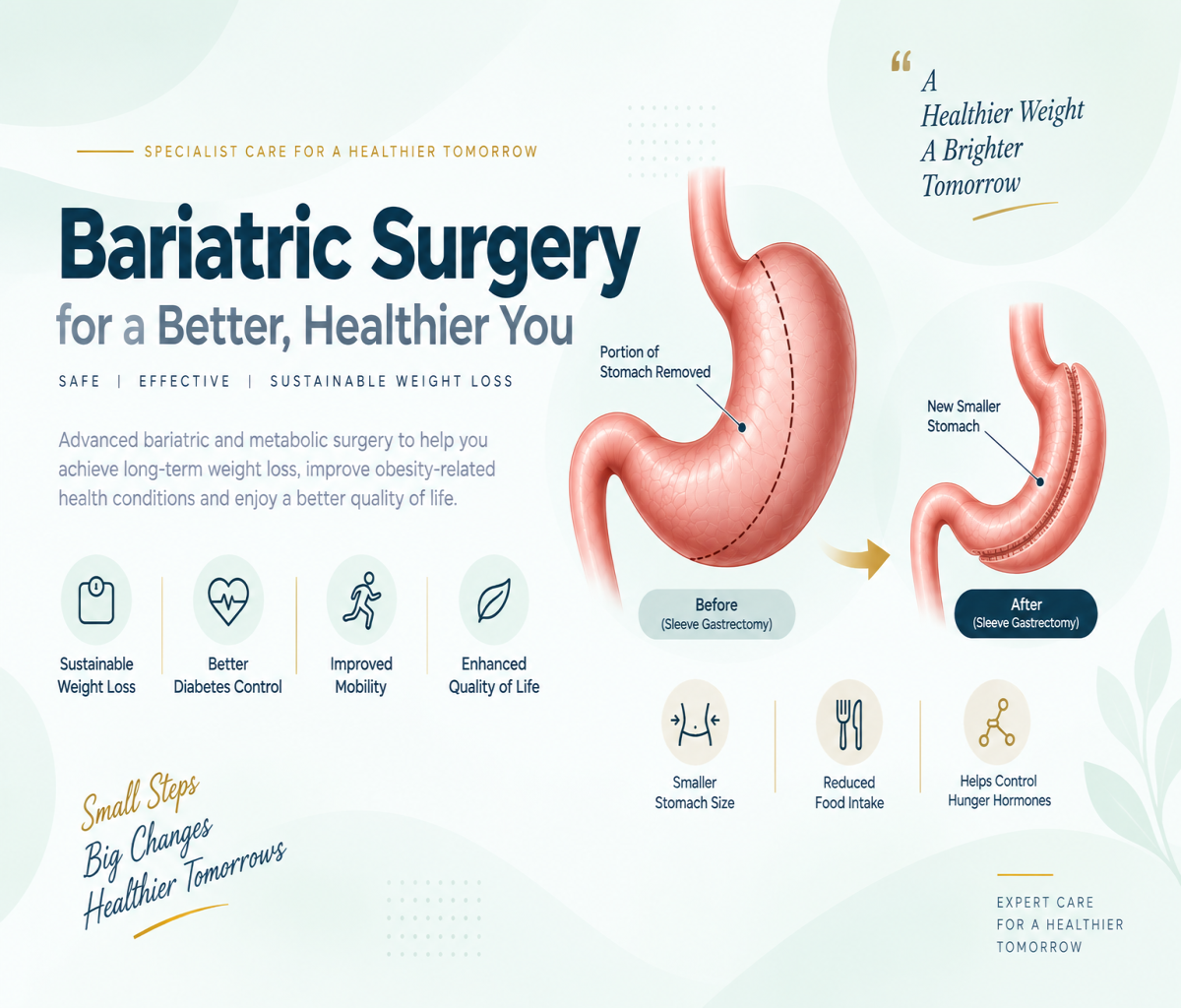
Sleeve gastrectomy removes a large portion of the stomach to create a smaller stomach. It can help reduce food intake and influence appetite-related signals.
Gastric Bypass Surgery
Gastric bypass creates a smaller stomach pouch and changes the pathway of food through the digestive system. It can provide significant weight loss and metabolic benefits in selected patients.
Who Can Consider Bariatric Surgery?
Bariatric surgery is not suitable for everyone. A detailed medical assessment is required before deciding whether surgery is appropriate.
BMI Is One Part of the Assessment
BMI is useful for screening, but the decision about metabolic and bariatric surgery should also consider obesity-related diseases, previous treatment attempts, nutritional status and the patient's ability to follow long-term care.
Factors Considered Before Surgery
Your surgeon may evaluate:
- BMI and pattern of weight gain
- Type 2 diabetes or metabolic disease
- High blood pressure and cardiovascular risk
- Sleep apnea and other obesity-related conditions
- Previous diet, exercise and medical weight-loss attempts
- Nutritional and psychological readiness
- Ability to maintain long-term follow-up
Types of Bariatric Surgery
Different procedures have different effects on food intake, appetite, digestion and metabolism.
Sleeve Gastrectomy
A large portion of the stomach is removed, leaving a smaller tubular stomach. It is one of the commonly performed metabolic surgery procedures.
Gastric Bypass
A small stomach pouch is created and connected to the small intestine, changing both food intake and nutrient absorption.
Revision Bariatric Surgery
Selected patients who have had previous bariatric surgery may require evaluation for a revision or conversion procedure.
Benefits of Bariatric & Metabolic Surgery
Outcomes vary between patients and depend on the procedure, health status, nutrition and long-term follow-up.
Sustainable Weight Loss
Can support substantial and durable weight reduction in appropriately selected patients.
Better Diabetes Control
Metabolic surgery may improve glycemic control in suitable patients.
Improved Mobility
Weight reduction may make physical activity and everyday movement easier.
Quality of Life
Successful long-term weight management can improve overall quality of life.
From Evaluation to Long-Term Weight Management
Bariatric surgery is a process rather than a single procedure. Long-term follow-up is an important part of care.
Initial Evaluation
Medical history, BMI, obesity-related conditions, previous weight-loss attempts and treatment goals are reviewed.
Pre-Surgery Assessment
Necessary blood tests, imaging and medical assessments are performed according to the patient's condition.
Bariatric Procedure
The selected operation is performed using minimally invasive techniques whenever appropriate.
Long-Term Follow-Up
Nutrition, physical activity, supplements, weight progress and medical conditions are monitored over time.
Bariatric Surgery Requires Long-Term Commitment
Modern bariatric surgery is generally performed using minimally invasive techniques, but every operation carries potential risks. Individual risks should be discussed during consultation.
Before Surgery
Detailed medical evaluation, nutrition planning and assessment of obesity-related conditions help determine surgical suitability.
After Surgery
Diet progression, hydration, physical activity, prescribed supplements and follow-up appointments are important for recovery and long-term results.
Long-Term Monitoring
Regular follow-up helps monitor weight, nutrition, metabolic health and any procedure-related concerns.
Dr. Amit Jain
Dr. Amit Jain provides surgical gastroenterology, laparoscopic and bariatric care with a focus on individualized treatment for complex gastrointestinal and obesity-related conditions.
Patients are evaluated to determine whether lifestyle, medical weight management or bariatric surgery is the most appropriate treatment pathway.
Book an AppointmentWhere to Consult Dr. Amit Jain
Consultation services are available at selected locations in Delhi and Greater Noida.
Max Super Speciality Hospital
108A, IP Extension,
Patparganj,
Delhi – 110092
Royal Golf Plaza
The Hemisphere,
Inside Joyful Smiles Dental Studio,
Greater Noida, Uttar Pradesh – 201310
JM Florence Market
Near Ek Murti Chowk,
Greater Noida West,
Uttar Pradesh – 201009
Bariatric Surgery FAQs
Answers to common questions about weight-loss and metabolic surgery.
Looking for Bariatric Surgery in Delhi or Greater Noida?
Discuss your weight, metabolic health and treatment options with Dr. Amit Jain to understand whether bariatric surgery or another weight-management approach is appropriate for you.
Book an Appointment