
Gastrointestinal Cancer Treatment
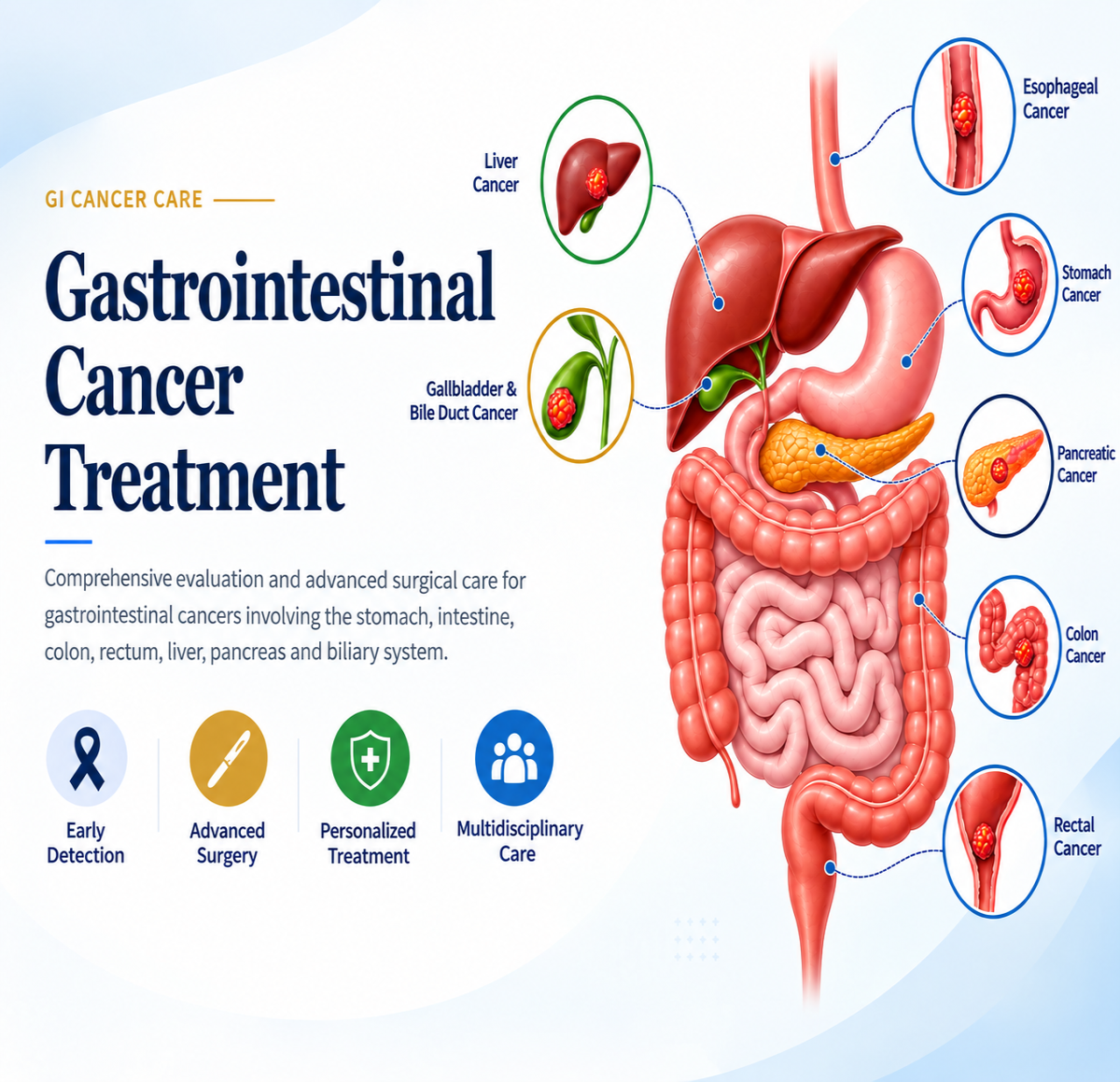
Comprehensive evaluation and advanced surgical care for gastrointestinal cancers involving the stomach, intestine, colon, rectum, liver, pancreas and biliary system.
Specialist GI Cancer Care
Surgical evaluation and treatment planning for gastrointestinal cancers.
Comprehensive Evaluation
Diagnosis, staging and personalised treatment planning based on the cancer type and stage.
Consultation in Delhi
GI oncology consultation associated with Max Super Speciality Hospital, Patparganj.
What Is Gastrointestinal Cancer?
Gastrointestinal cancer refers to cancers that develop in organs of the digestive system. Depending on the location, these cancers may affect the food pipe, stomach, small intestine, colon, rectum, liver, pancreas, gallbladder or bile ducts.
Treatment depends on the type and location of the cancer, its stage, the patient's overall health and whether the tumour can be treated with surgery. A detailed evaluation helps determine the most appropriate treatment approach.
For selected patients, surgery may be an important part of treatment. Depending on the cancer and individual clinical factors, minimally invasive surgical techniques may also be considered.

Types of Gastrointestinal Cancer
Gastrointestinal cancers can develop in different parts of the digestive and hepatobiliary system. Treatment is planned according to the specific cancer and stage.
Upper GI Cancers
- Esophageal cancer
- Stomach cancer
- Gastroesophageal junction cancer
- Selected small intestine cancers
Lower GI Cancers
- Colon cancer
- Rectal cancer
- Colorectal cancer
- Selected intestinal tumours
Hepatobiliary & Pancreatic Cancers
- Liver cancer
- Gallbladder cancer
- Bile duct cancer
- Pancreatic cancer
Symptoms of Gastrointestinal Cancer
Symptoms vary depending on the organ involved and the stage of disease. Persistent or unexplained symptoms should be assessed by a qualified doctor.
Early evaluation can help identify the cause of symptoms and determine whether further investigations are required.
Blood in Stool
Rectal bleeding or blood in the stool should be medically evaluated.
Unexplained Weight Loss
Unexpected weight loss may require further investigation.
Abdominal Symptoms
Persistent abdominal pain, discomfort or changes in bowel habits may need assessment.
Other Warning Signs
Difficulty swallowing, jaundice, vomiting or persistent loss of appetite may require evaluation.
How Is Gastrointestinal Cancer Diagnosed?
Diagnosis begins with a clinical assessment and may involve imaging, endoscopy and tissue sampling. The exact investigations depend on the suspected site of cancer.
Once cancer is confirmed, staging investigations help determine the extent of disease and guide treatment planning.
Medical history, physical examination and assessment of symptoms.
Upper GI endoscopy or colonoscopy may be recommended depending on the suspected site.
Tissue examination may be required to confirm the diagnosis and identify the cancer type.
Cross-sectional imaging may help assess the primary tumour and surrounding structures.
PET-CT may be advised in selected cancers when clinically appropriate.
Results are combined to determine the extent of disease and plan treatment.
Gastrointestinal Cancer Treatment Options
Treatment is individualised according to the cancer type, location, stage and overall health. Surgery, systemic treatment and radiation may be used alone or in combination when clinically appropriate.
Cancer Surgery
Surgery may be recommended when the tumour is suitable for surgical removal. The procedure depends on the organ involved and extent of disease.
Chemotherapy & Systemic Treatment
Drug-based treatment may be recommended before or after surgery or for cancers that require systemic therapy.
Radiation Therapy
Radiation may be included in the treatment plan for selected gastrointestinal cancers depending on the tumour location and stage.
Advanced Surgical Treatment for GI Cancers
Surgical treatment is planned according to the location, size and stage of the tumour and the patient's overall medical condition.
Stomach & Esophageal Surgery
Selected stomach and esophageal cancers may require surgical removal of the tumour and involved tissue, depending on disease extent.
Colorectal Cancer Surgery
Colon and rectal cancer surgery is planned according to tumour location, stage and the need to preserve normal bowel function where possible.
Liver, Pancreas & Biliary Surgery
Selected cancers of the liver, pancreas, gallbladder and bile ducts may require specialised hepatobiliary or pancreatic surgery.
Laparoscopic GI Cancer Surgery
Minimally invasive techniques may be suitable for selected gastrointestinal cancer operations. Small incisions and specialised surgical instruments are used to perform the procedure.
Suitability depends on the type and stage of cancer, previous surgery, overall health and the surgeon's assessment.
Personalised Cancer Treatment
There is no single treatment plan for every gastrointestinal cancer patient. Treatment decisions are based on pathology, imaging, cancer stage and the patient's overall condition.
A multidisciplinary approach may help coordinate surgery with oncology, gastroenterology, radiology and other specialist care.
Multidisciplinary GI Cancer Treatment
Gastrointestinal cancer care may involve several medical specialties. Treatment planning can require coordination between surgical, medical and diagnostic teams.
The treatment approach is selected according to the patient's diagnosis, cancer stage and individual clinical requirements.
GI Oncosurgeon
Surgical evaluation and cancer surgery.
Medical Oncologist
Systemic cancer treatment when required.
Radiation Oncologist
Radiation treatment for selected cancers.
Diagnostic Team
Imaging, pathology and diagnostic support.
Gastrointestinal Cancer Care by Dr. Amit Jain
Dr. Amit Jain is a Senior Consultant in Surgical Gastroenterology with clinical interests including GI Oncology, Liver Transplant, Laparoscopy and Bariatric Surgery at Max Super Speciality Hospital, Patparganj, Delhi.
His surgical practice includes gastrointestinal, hepatobiliary and pancreatic conditions. Patients can discuss their diagnosis, investigations and available treatment options during specialist consultation.
About Dr. Amit JainGI Cancer Consultation in Delhi
Dr. Amit Jain is associated with Max Super Speciality Hospital, Patparganj, Delhi for Surgical Gastroenterology and GI Oncology care.
The appropriate consultation and treatment location depends on the patient's medical requirement and the service being sought.
Related GI & Cancer Services
Need a Gastrointestinal Cancer Consultation?
If you or a family member has been diagnosed with gastrointestinal cancer or advised to undergo cancer surgery, a specialist consultation can help review the diagnosis and discuss appropriate treatment options.
Book an Appointment