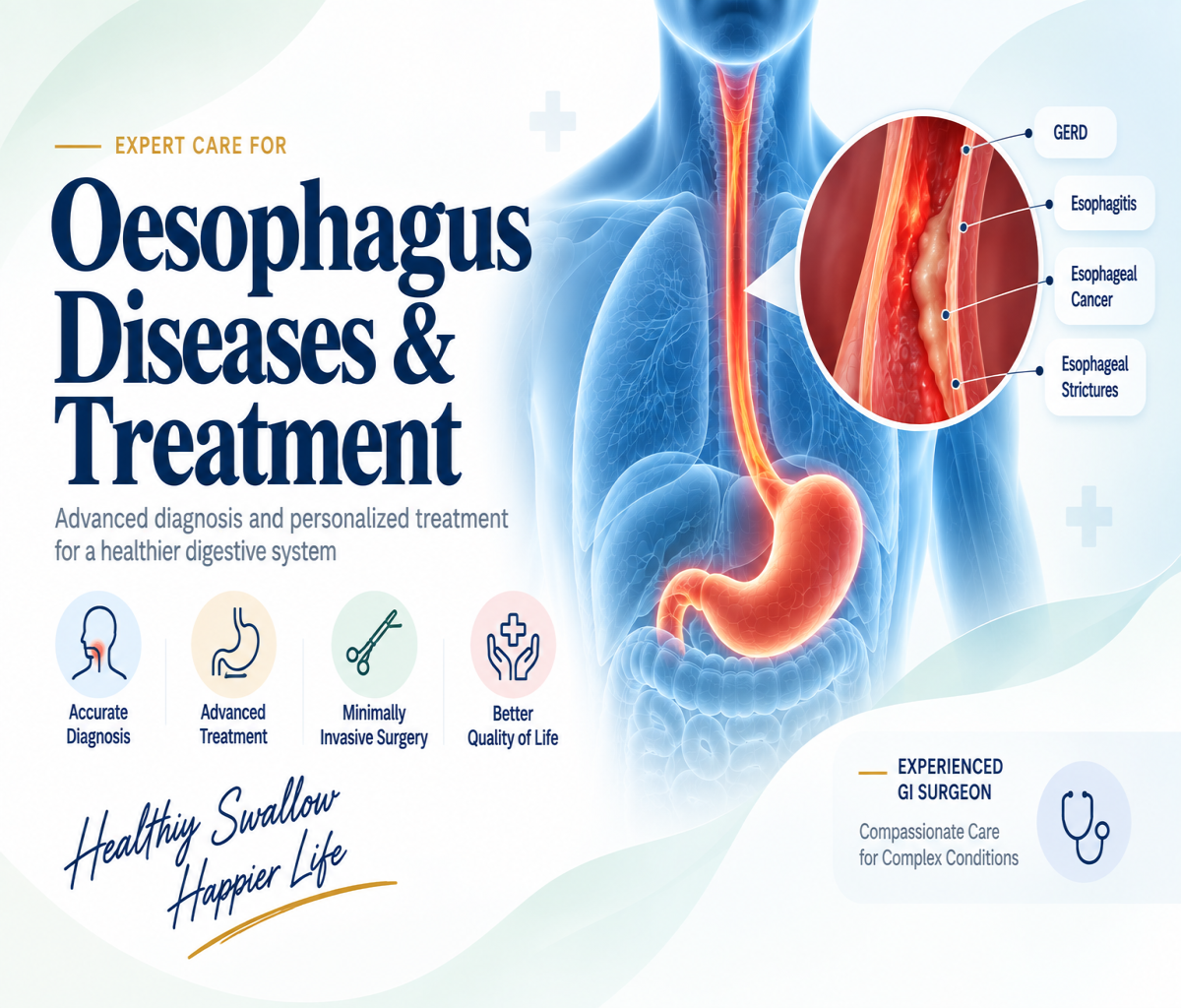
Oesophagus
Diseases & Treatment
Comprehensive diagnosis and advanced treatment for esophageal cancer, GERD, hiatus hernia, achalasia and other esophageal disorders.
Accurate Diagnosis
Endoscopy, imaging and specialist assessment
GI Surgical Care
Comprehensive esophageal treatment planning
Individualised Care
Treatment based on disease and patient needs
Specialist Consultation
Expert evaluation for complex conditions
Understanding Esophageal Diseases
The oesophagus carries food from the mouth to the stomach. Disorders affecting this organ can cause swallowing difficulty, reflux, chest discomfort and other digestive symptoms.
Esophageal Cancer
Esophageal cancer can be associated with smoking, alcohol intake, obesity and long-standing GERD. Evaluation includes endoscopy with biopsy and appropriate imaging.
GERD
Gastroesophageal reflux disease occurs when stomach contents flow back into the oesophagus due to weakness of the lower esophageal sphincter.
Swallowing Disorders
Conditions such as achalasia can interfere with normal swallowing and may require specialised diagnostic and surgical treatment.
Common Oesophageal Conditions
Esophageal Cancer
Evaluation and treatment planning for operable and advanced esophageal cancer.
GERD
Management of persistent acid reflux, regurgitation and associated complications.
Hiatus Hernia
Evaluation and treatment of sliding and paraesophageal hernias.
Achalasia Cardia
Specialist treatment for difficulty swallowing and lower esophageal sphincter dysfunction.
Corrosive Injury
Assessment and management of esophageal injury caused by acids or alkalis.
Esophageal Stricture
Specialist assessment of swallowing difficulty and esophageal narrowing following injury or disease.
Esophageal Cancer
Early specialist evaluation is important when persistent swallowing difficulty or other concerning symptoms are present.
Risk Factors
- Smoking and alcohol increase the risk of squamous cell carcinoma
- Obesity and GERD increase the risk of adenocarcinoma
Common Symptoms
- Difficulty swallowing
- Chest pain
- Food regurgitation
- Weight loss
- Loss of appetite
- Breathing difficulty in advanced disease
Diagnosis of Esophageal Cancer
Investigation is planned according to symptoms, clinical findings and suspected disease.
- Upper GI endoscopy with biopsy
- CT scan of chest and abdomen
- PET scan in selected patients
Treatment Options
- Surgical removal when tumor is operable
- Pre-operative chemo-radiotherapy in advanced cases
- Endoscopic stent placement for swallowing difficulty
- Feeding jejunostomy if stenting is not possible
GERD – Gastroesophageal Reflux Disease
GERD occurs when stomach contents flow back into the oesophagus due to weakness of the lower esophageal sphincter.
Symptoms
- Heartburn
- Regurgitation
- Difficulty swallowing
- Chronic cough
- Worsening asthma
Risk Factors
- Obesity
- Hiatus hernia
- Smoking
- Alcohol or coffee
- Large meals
- Pregnancy
Complications
- Esophageal ulcers
- Barrett's esophagus
- Benign esophageal stricture
Diagnosis
- 24-hour pH monitoring
- Upper GI endoscopy
- Esophageal manometry
Treatment for Acid Reflux
Treatment depends on the severity of symptoms and associated complications.
- Lifestyle modification
- Proton pump inhibitors
- Antacids
- Prokinetic medicines
- H2 blockers
When Is Surgery Considered?
Surgery may be recommended when medications do not adequately control symptoms or when a hiatus hernia is present.
The standard procedure described for suitable patients is Nissen Fundoplication.
Hiatus Hernia
Hiatus hernia occurs when part of the stomach moves into the chest cavity through the opening in the diaphragm where the oesophagus passes.
Sliding Hernia
The gastroesophageal junction moves into the chest.
Paraesophageal Hernia
The stomach moves beside the esophagus.
Common Symptoms
- Heartburn
- Chest discomfort
- Food regurgitation
- Difficulty swallowing
Treatment
- Lifestyle modification
- Proton pump inhibitors
- Laparoscopic hernia repair
- Fundoplication surgery
Achalasia Cardia
Achalasia is a condition in which the lower esophageal sphincter fails to relax properly during swallowing.
Symptoms
- Difficulty swallowing
- Food regurgitation
- Chest discomfort
Diagnosis is made using endoscopy and esophageal manometry.
Corrosive Esophageal Injury
Corrosive injury can occur after ingestion of acids or alkalis. It is usually accidental in children and may be intentional in adults.
Alkali ingestion mainly damages the esophagus, while acids commonly affect the stomach.
Emergency Management
- Maintain airway and breathing
- Intravenous fluids
- Nil by mouth
- Vital monitoring
- X-ray chest and abdomen
Treatment for Complex Esophageal Conditions
Nutritional Support
Patients who develop swallowing difficulty after corrosive injury may require feeding jejunostomy for nutritional support.
CT Evaluation
CT scan may be performed when complications such as perforation or necrosis are suspected.
Emergency Surgery
Critically ill patients may require emergency surgery to control infection and prevent life-threatening complications.
Esophageal Treatment by Dr. Amit Jain
Dr. Amit Jain is a Surgical Gastroenterologist with expertise in GI Surgery, HPB Surgery, GI Oncology, Laparoscopic Surgery and related complex gastrointestinal conditions.
Patients with esophageal disorders can undergo specialist evaluation to determine whether medical management, endoscopic treatment or surgery is appropriate.
- Specialist GI surgical evaluation
- Advanced esophageal disease management
- GI oncology expertise
- Laparoscopic surgical expertise
- Individualised treatment planning
- Management of complex GI conditions
Esophageal Treatment in Delhi & Greater Noida
Patients from Delhi, Noida, Greater Noida and Delhi NCR can seek specialist evaluation for esophageal disorders.
Max Super Speciality Hospital
108A, IP Extension, Patparganj, Delhi – 110092
Royal Golf Plaza
The Hemisphere, Inside Joyful Smiles Dental Studio, Greater Noida, Uttar Pradesh – 201310
JM Florence Market
Near Ek Murti Chowk, Greater Noida West, Uttar Pradesh – 201009
Frequently Asked Questions
Common questions about oesophageal diseases and treatment.
Common symptoms can include difficulty swallowing, heartburn, food regurgitation, chest discomfort, nausea and unexplained weight loss depending on the underlying condition.
GERD is gastroesophageal reflux disease, in which stomach contents flow back into the oesophagus.
Long-standing GERD can be associated with complications such as esophageal ulcers, Barrett's esophagus and benign esophageal strictures.
Investigations may include upper GI endoscopy, 24-hour pH monitoring and esophageal manometry.
A hiatus hernia occurs when part of the stomach moves into the chest through the opening in the diaphragm through which the oesophagus passes.
Achalasia is a condition in which the lower esophageal sphincter does not relax properly during swallowing.
Treatment depends on the individual patient. The source content describes laparoscopic Heller's myotomy as the standard treatment.
Difficulty swallowing is a common symptom. Other symptoms may include chest pain, food regurgitation, weight loss, loss of appetite and breathing difficulty in advanced disease.
Diagnosis may include upper GI endoscopy with biopsy, CT scan of the chest and abdomen and PET scan in selected patients.
You can book an appointment through the appointment page and confirm the appropriate consultation location based on the required service and availability.
Need Evaluation for an Esophageal Condition?
Consult an experienced GI surgeon for personalised evaluation, diagnosis and treatment planning.
Book for Appointment