
Laparoscopic Surgery
Advanced minimally invasive surgical treatment for selected gastrointestinal and abdominal conditions, with a focus on precise surgery, smaller incisions and appropriate patient recovery.
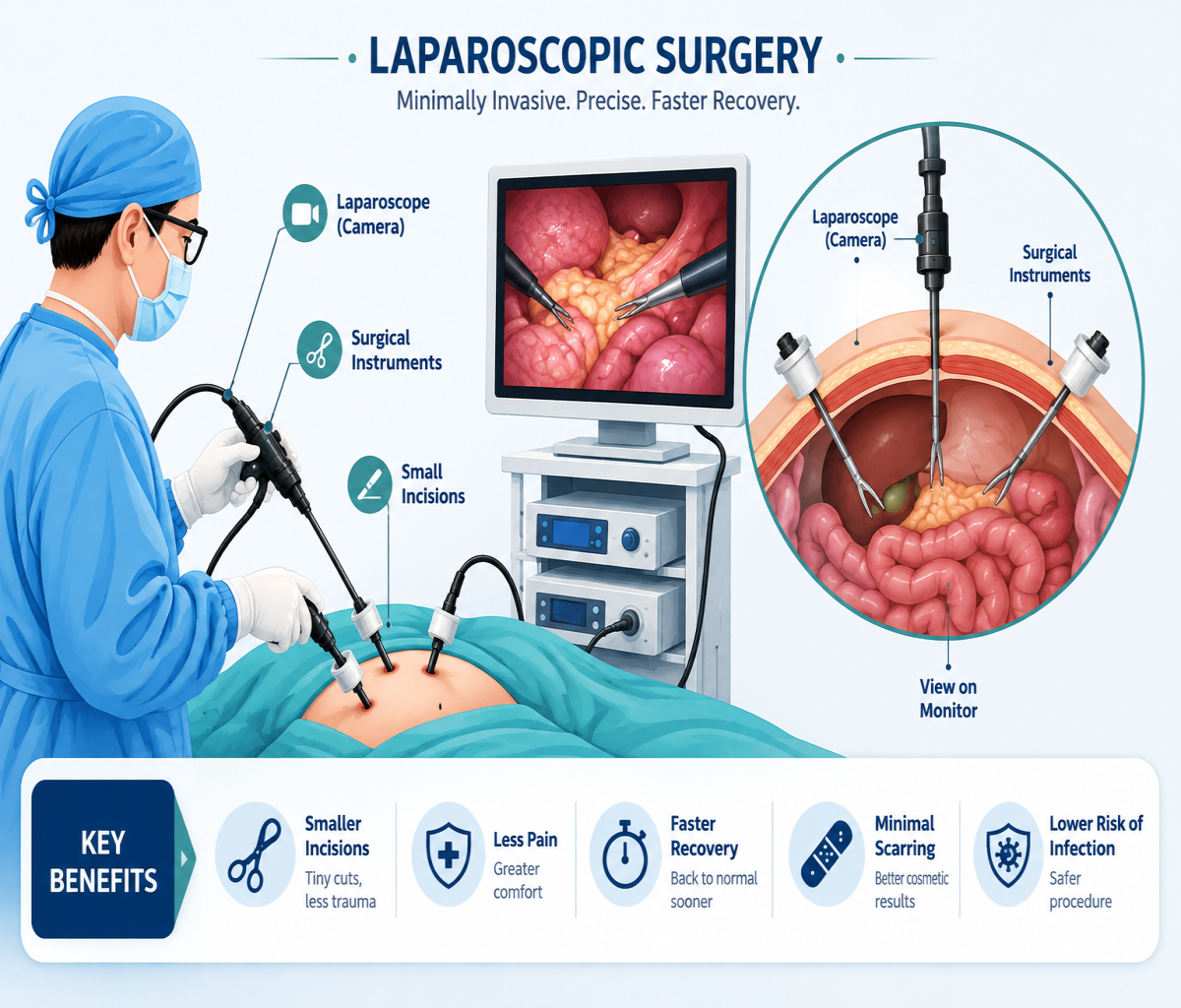
Minimally Invasive Surgery
Small incisions, camera-assisted surgery and an individualised surgical approach.
Minimally Invasive Approach
Camera-assisted surgery through small abdominal incisions when appropriate.
Specialist GI Care
Laparoscopic treatment for selected gastrointestinal and abdominal conditions.
Greater Noida & Delhi NCR
Consultation and treatment planning based on the patient's medical requirement.
What Is Laparoscopic Surgery?
Laparoscopic surgery is a minimally invasive surgical technique used to treat selected conditions affecting the abdomen and gastrointestinal system.
Instead of making one large incision, the surgeon generally uses small incisions through which a laparoscope and specialised surgical instruments are introduced. The laparoscope has a camera and light that allow the surgical area to be viewed on a monitor.
The approach can provide smaller surgical wounds and may support less postoperative discomfort and a faster return to normal activities compared with suitable open procedures. The appropriate technique depends on the condition, patient's health and surgical assessment.
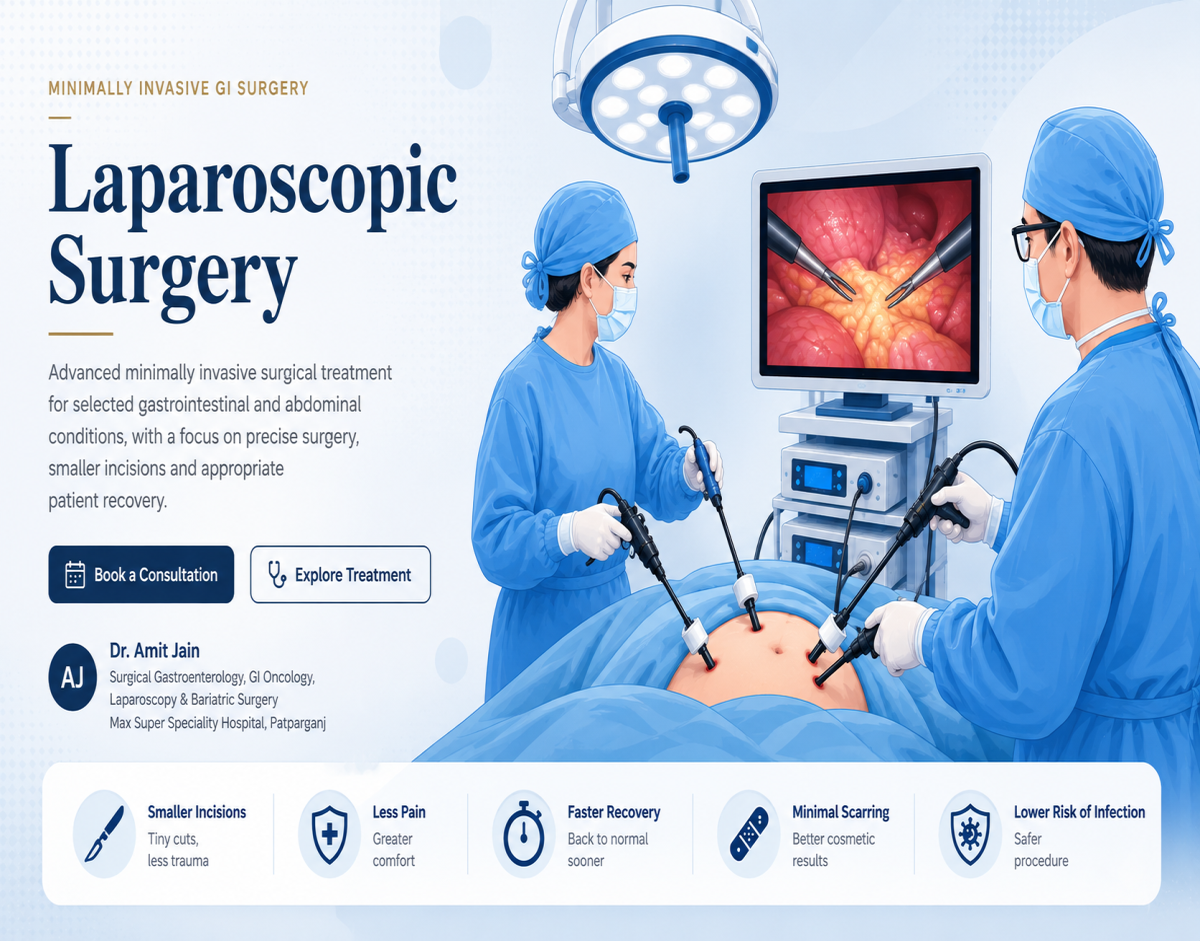
Camera-Assisted Surgery
A laparoscope provides an enlarged view of the surgical area, helping the surgeon perform precise minimally invasive procedures.
When Is Laparoscopic Surgery Recommended?
Laparoscopic surgery may be considered when a minimally invasive approach is appropriate for the patient's condition and overall health.
Conditions Commonly Treated
- Gallbladder disease and gallstones
- Appendicitis requiring surgery
- Inguinal and abdominal hernia
- Selected intestinal conditions
- Bariatric surgery procedures
- Selected gastrointestinal cancers
- Other abdominal conditions where minimally invasive surgery is suitable
Factors Considered Before Surgery
- Type and severity of the condition
- Previous abdominal surgeries
- Overall health and medical history
- Results of imaging and laboratory tests
- Anaesthesia and surgical fitness
- Whether laparoscopic surgery is technically appropriate for the patient
Laparoscopic Surgeries Offered
Selected gastrointestinal and abdominal procedures may be performed using minimally invasive techniques depending on the patient's condition.
Laparoscopic Gallbladder Surgery
Laparoscopic cholecystectomy is commonly used for suitable patients with gallstones and gallbladder-related conditions.
Laparoscopic Hernia Repair
Selected inguinal, ventral and abdominal hernias may be treated using minimally invasive laparoscopic techniques.
Laparoscopic Appendix Surgery
Laparoscopic appendectomy may be recommended for suitable patients requiring surgical treatment of appendicitis.
Laparoscopic Intestinal Surgery
Selected intestinal and gastrointestinal conditions can be evaluated for a minimally invasive surgical approach.
Laparoscopic Bariatric Surgery
Bariatric procedures may be performed laparoscopically in appropriate patients after detailed evaluation and treatment planning.
Laparoscopic GI Cancer Surgery
Selected gastrointestinal cancer surgeries may use minimally invasive techniques when medically and technically appropriate.
Advantages of Laparoscopic Surgery
Compared with conventional open surgery, a minimally invasive approach can offer several potential benefits for appropriately selected patients.
The actual benefits vary depending on the type of surgery, patient's health and postoperative recovery.
Smaller Incisions
Surgical access generally requires smaller incisions than traditional open surgery.
Less Postoperative Pain
Many suitable patients experience less discomfort after minimally invasive surgery.
Faster Recovery
Recovery may be quicker in selected procedures compared with open surgery.
Minimal Scarring
Smaller incisions can result in comparatively smaller surgical scars.
Laparoscopic Surgery Evaluation
Before recommending laparoscopic surgery, the surgeon evaluates the patient's condition, medical history and overall fitness for surgery.
The evaluation also helps determine whether laparoscopic or another surgical approach is more appropriate.
Review of symptoms, previous illnesses, surgeries and current medicines.
Clinical assessment of the abdomen and overall physical condition.
Laboratory investigations may be advised according to the planned procedure.
Ultrasound, CT scan, MRI or other imaging may be required depending on the condition.
Anaesthesia and other medical assessments may be performed before surgery.
The appropriate surgical approach is discussed based on the patient's condition.
How Is Laparoscopic Surgery Performed?
The procedure is performed under appropriate anaesthesia using a laparoscope and specialised surgical instruments.
Small Incisions
Small openings are made in the abdominal wall to provide access for the laparoscope and surgical instruments.
Camera-Assisted View
A laparoscope with a camera and light provides a magnified view of the surgical area on a monitor.
Surgical Treatment
Specialised instruments are used to perform the planned procedure through the small ports.
Recovery After Laparoscopic Surgery
Recovery depends on the type of laparoscopic procedure, the patient's health and whether any complications occur.
- Early mobilisation when advised
- Gradual return to normal diet
- Wound care as instructed
- Prescribed medicines
- Follow-up consultation
- Gradual return to normal activities
Healing and Return to Activities
Small surgical wounds generally heal faster than larger open-surgery incisions. However, recovery time varies according to the procedure.
Patients should follow the surgeon's instructions regarding physical activity, diet, wound care and follow-up appointments.
Heavy lifting and strenuous activities may need to be avoided for a period recommended by the treating surgeon.
Risks and Possible Complications
Laparoscopic surgery is generally considered safe when performed for appropriate patients, but every surgical procedure carries potential risks.
- Bleeding
- Infection
- Injury to nearby organs or blood vessels
- Anaesthesia-related complications
- Blood clots or respiratory complications
- Need to convert to open surgery in selected cases
Laparoscopic Surgery Cost in Greater Noida
The cost of laparoscopic surgery depends on the type and complexity of the procedure, hospital facilities, investigations and patient's medical condition.
- Type of laparoscopic procedure
- Complexity of surgery
- Hospital and room category
- Diagnostic investigations
- Duration of hospital stay
An estimated treatment cost can be discussed after clinical evaluation and confirmation of the planned procedure.
Dr. Amit Jain
Surgical Gastroenterology
Laparoscopic Surgery by Dr. Amit Jain
Dr. Amit Jain is a Senior Consultant in Surgical Gastroenterology, GI Oncology, Liver Transplant, Laparoscopy and Bariatric Surgery at Max Super Speciality Hospital, Patparganj, Delhi.
His clinical areas include gastrointestinal surgery, hepatobiliary surgery, laparoscopic procedures and bariatric surgery. Patients can discuss their symptoms, diagnosis and suitable surgical options during a specialist consultation.
About Dr. Amit JainLaparoscopic Surgery Consultation in Greater Noida
Patients from Greater Noida, Greater Noida West, Noida and nearby Delhi NCR areas can seek specialist consultation for gastrointestinal and abdominal surgical conditions.
The appropriate consultation and treatment location depends on the patient's condition, medical requirement and service being sought.
Related GI & Surgical Services
Need a Laparoscopic Surgery Consultation?
If you have been advised to undergo abdominal or gastrointestinal surgery, a specialist consultation can help determine whether a laparoscopic approach is suitable for your condition.
Book an Appointment