
Can You Live with Only Part of Your Liver? The Amazing Facts About Liver Regeneration
Published on 15 Jun 2026
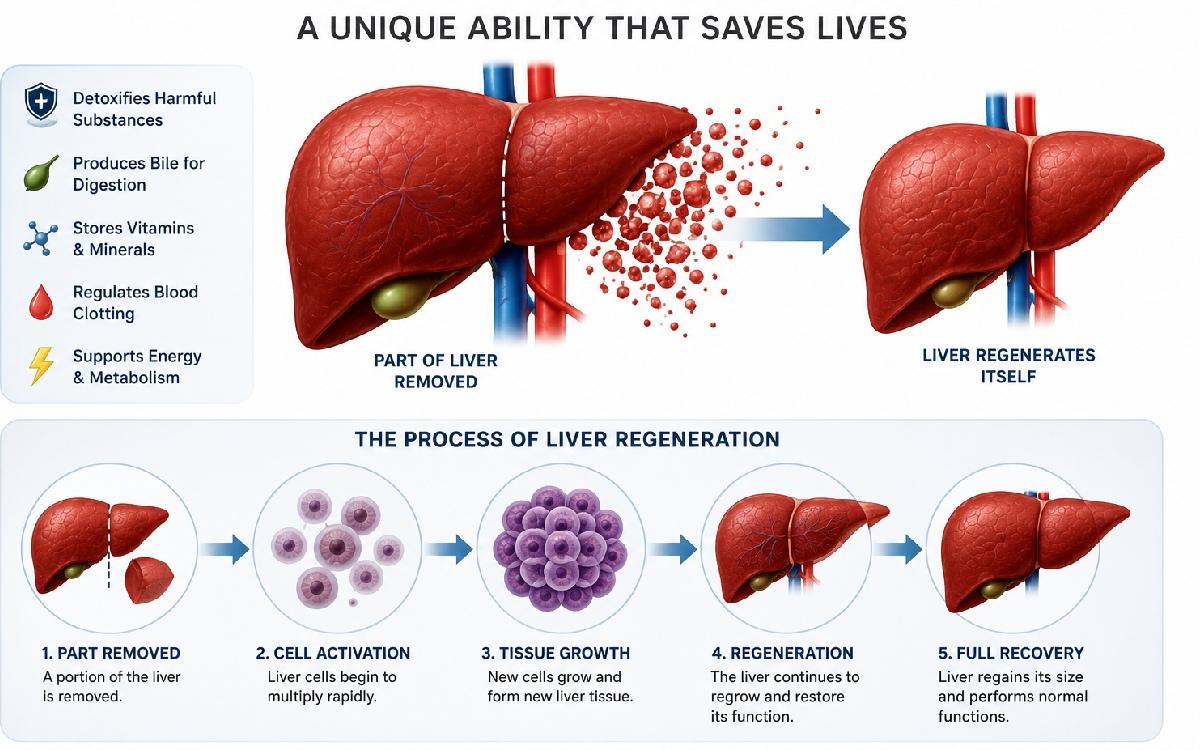
Imagine losing a significant portion of one of your body's most important organs and still being able to live a healthy life. It may sound impossible, but when it comes to the liver, it's a remarkable reality.
The liver is one of the few organs in the human body with the extraordinary ability to regenerate itself. This unique characteristic makes procedures like Liver Transplant and liver donation possible, offering hope to thousands of patients suffering from severe liver disease every year.
Many people wonder: Can you really live with only part of your liver? The answer is yes. In fact, both liver donors and recipients can often lead healthy, active lives after surgery.
In this article, we'll explore how liver regeneration works, why it is important in modern medicine, and what patients should know about living with a partial liver.
What Does the Liver Do?
Before understanding regeneration, it's important to know why the liver is so essential.
The liver performs more than 500 vital functions, including:
-
Filtering toxins from the blood
-
Producing bile for digestion
-
Storing vitamins and minerals
-
Regulating blood sugar levels
-
Processing nutrients from food
-
Supporting blood clotting
Because of these critical roles, maintaining liver health is essential for overall well-being.
Can You Live with Only Part of Your Liver?
Yes, you can.
One of the most fascinating facts about the liver is that it can continue functioning even when a significant portion has been removed.
During a living donor Liver Transplant, a healthy individual donates a portion of their liver to someone whose liver is failing. Both the donor's remaining liver and the transplanted portion can regenerate over time.
This means:
-
Donors can live normal lives with part of their liver.
-
Recipients receive a functioning liver segment that grows after transplantation.
-
Liver function can often return to near-normal levels during recovery.
This remarkable ability is what makes liver transplantation unique among organ transplants.
How Does Liver Regeneration Work?
Unlike many organs that heal by forming scar tissue, the liver can regenerate by growing new liver cells.
When part of the liver is removed:
-
The body detects the loss of liver tissue.
-
Growth factors and hormones stimulate liver cells.
-
Existing liver cells multiply rapidly.
-
The liver gradually regains its functional capacity.
Although the liver may not always return to its exact original shape, it can restore enough volume and function to support a healthy life.
How Long Does Liver Regeneration Take?
Liver regeneration begins almost immediately after surgery.
While recovery varies among individuals, studies have shown that:
-
Significant regeneration occurs within the first few weeks.
-
Much of the liver's volume returns within a few months.
-
Functional recovery often happens faster than physical regrowth.
Factors that influence recovery include:
-
Age
-
Overall health
-
Nutrition
-
Presence of underlying liver disease
-
Post-operative care
Following medical advice carefully can support optimal healing.
Why Is Liver Regeneration Important for Liver Transplantation?
The liver's regenerative ability has transformed the field of transplantation.
Traditionally, organ transplantation relied on deceased donors. Today, living donor Liver Transplant procedures provide another life-saving option for patients with advanced liver disease.
Benefits include:
Reduced Waiting Time
Patients can receive treatment sooner instead of waiting for a deceased donor organ.
Better Surgical Planning
The procedure can be scheduled in advance, reducing emergency situations.
Improved Outcomes
Living donor liver transplants often provide excellent long-term results when performed by experienced specialists.
Can Someone Donate Part of Their Liver?
Yes. A healthy person may be eligible to donate a portion of their liver if they meet specific medical criteria.
Potential donors undergo extensive evaluation to ensure:
-
Good physical health
-
Compatible blood type
-
Healthy liver function
-
Low surgical risk
The safety of the donor remains a top priority throughout the process.
What Conditions May Require a Liver Transplant?
A Liver Transplant may be recommended when the liver can no longer perform its essential functions.
Common conditions include:
Liver Cirrhosis
Severe scarring of the liver caused by chronic damage.
Acute Liver Failure
A sudden loss of liver function that requires urgent medical intervention.
Genetic Liver Disorders
Certain inherited conditions can affect liver function over time.
Liver Cancer
For selected patients with Liver cancer, transplantation may provide an effective treatment option when the disease is confined to the liver.
Early diagnosis and expert medical evaluation are essential in determining the most appropriate treatment plan.
Can Patients with Liver Cancer Benefit from a Liver Transplant?
In carefully selected cases, yes.
Certain patients with Liver cancer may be candidates for transplantation if the tumor meets specific criteria and has not spread beyond the liver.
A transplant can:
-
Remove the cancerous liver tissue
-
Treat underlying liver disease
-
Improve long-term survival prospects
However, treatment decisions depend on several factors, including tumor size, number of tumors, and overall health.
Life After Living Liver Donation
Many potential donors worry about their long-term health.
The encouraging news is that most donors return to normal daily activities after recovery.
Many donors successfully resume:
-
Work
-
Exercise
-
Travel
-
Family responsibilities
Regular follow-up appointments help ensure proper healing and ongoing liver health.
Tips for Supporting Liver Health
Whether you've undergone surgery or simply want to maintain a healthy liver, these habits can help:
Eat a Balanced Diet
Focus on:
-
Fruits and vegetables
-
Whole grains
-
Lean proteins
-
Healthy fats
Limit Alcohol Consumption
Excessive alcohol intake can cause long-term liver damage.
Maintain a Healthy Weight
Obesity increases the risk of fatty liver disease.
Exercise Regularly
Physical activity supports overall liver function and metabolic health.
Avoid Unnecessary Medications
Always use medications responsibly and follow medical guidance.
Schedule Regular Health Checkups
Early detection of liver disease improves treatment outcomes.
When Should You Consult a Liver Specialist?
Certain symptoms may indicate liver disease and should not be ignored.
Seek medical evaluation if you experience:
-
Persistent fatigue
-
Yellowing of the skin or eyes (jaundice)
-
Abdominal swelling
-
Unexplained weight loss
-
Loss of appetite
-
Chronic abdominal pain
Consulting an experienced liver specialist Delhi can help identify potential problems early and ensure timely treatment.
Individuals diagnosed with Liver cancer or advanced liver disease should seek expert care as soon as possible.
The Future of Liver Regeneration Research
Researchers continue exploring new ways to harness the liver's regenerative power.
Emerging areas of study include:
-
Stem cell therapy
-
Tissue engineering
-
Artificial liver support systems
-
Regenerative medicine
These innovations may improve treatment options for patients with severe liver disease in the future.
Conclusion
The liver is one of the most extraordinary organs in the human body. Its unique ability to regenerate allows people to live healthy lives even with only part of their liver. This remarkable characteristic has made modern Liver Transplant procedures possible and has saved countless lives worldwide.
Whether you're considering liver donation, facing liver disease, or seeking treatment for Liver cancer, understanding how liver regeneration works can provide reassurance and hope.
If you or a loved one is experiencing symptoms of liver disease, don't delay seeking expert medical advice. Consult an experienced liver specialist Delhi to discuss diagnosis, treatment options, and whether advanced interventions such as a Liver Transplant may be appropriate.
Early diagnosis and timely care can make a life-changing difference.
Frequently Asked Questions (FAQs)
Can a person live with only 30% of their liver?
Yes. The liver can continue functioning with a reduced volume and gradually regenerate after surgery.
Does the liver grow back completely after donation?
The liver regains much of its size and function over time, although it may not return to its exact original shape.
How long does it take for the liver to regenerate?
Most regeneration occurs during the first few months after surgery, though recovery varies by individual.
Is liver donation safe?
Living liver donation is generally safe when performed at experienced transplant centers after thorough medical evaluation.
Can Liver cancer patients undergo a Liver Transplant?
Some patients with early-stage Liver cancer may qualify for transplantation if they meet specific medical criteria.