Hernia Symptoms Explained: When Should You See a Surgeon?
Published on 09 Jun 2026
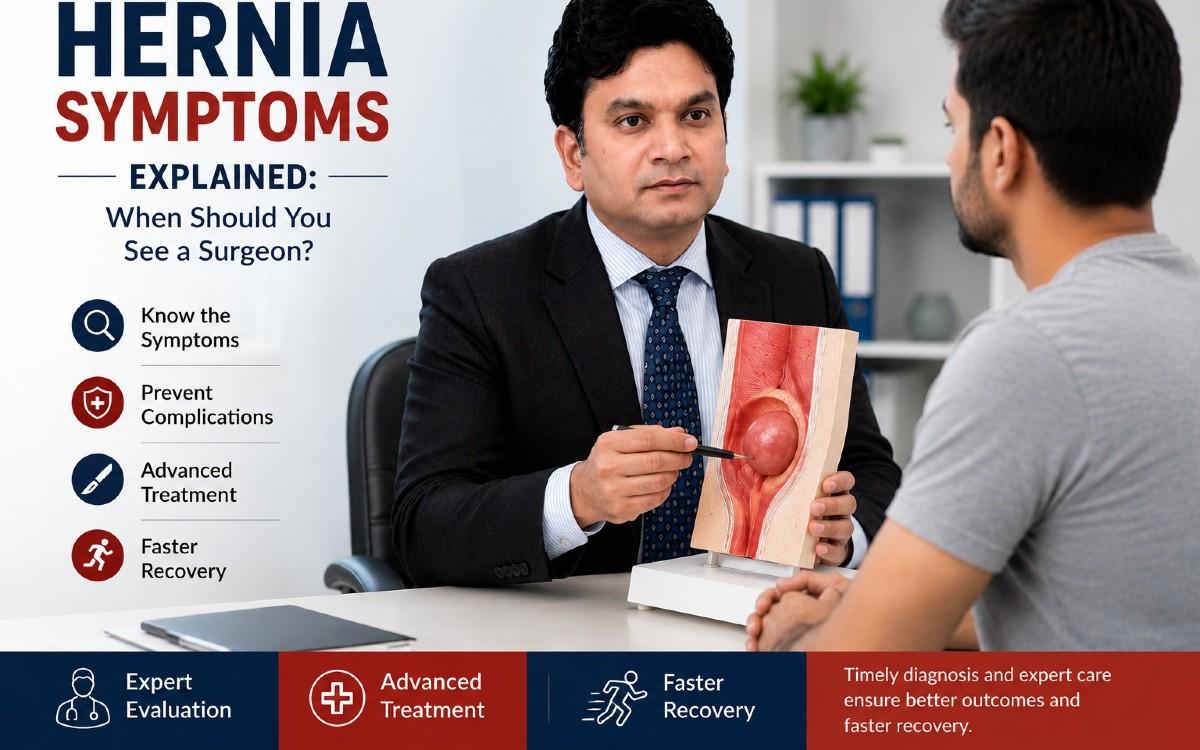
Have you noticed a small bulge in your abdomen or groin that seems to appear when you stand, cough, or lift something heavy? While it may not seem serious at first, it could be a sign of a hernia—a common condition that affects millions of people worldwide.
Many people ignore hernia symptoms because the discomfort often starts mildly. However, delaying treatment can lead to complications that may require emergency medical attention. Understanding the warning signs and knowing when to consult a specialist can make a significant difference in your health and recovery.
In this guide, we'll explain the most common hernia symptoms, discuss when medical evaluation is necessary, and explore how modern hernia surgery can effectively treat the condition.
What Is a Hernia?
A hernia occurs when an internal organ or tissue pushes through a weak area in the surrounding muscle or connective tissue.
Hernias commonly develop in:
-
The groin (inguinal hernia)
-
The upper stomach (hiatal hernia)
-
The belly button area (umbilical hernia)
-
Previous surgical incision sites (incisional hernia)
Although some hernias remain small and painless initially, they generally do not heal on their own and often worsen over time.
Common Hernia Symptoms You Shouldn't Ignore
The symptoms of a hernia can vary depending on its type and severity.
1. A Visible Bulge or Lump
The most recognizable sign of a hernia is a bulge beneath the skin.
You may notice:
-
A swelling in the groin or abdomen
-
A lump that becomes more noticeable when standing
-
A bulge that disappears when lying down
This symptom is often the first indication that something isn't right.
2. Pain or Discomfort
Many patients experience pain that ranges from mild to severe.
Common situations that worsen discomfort include:
-
Lifting heavy objects
-
Coughing or sneezing
-
Standing for long periods
-
Physical activity
The pain may feel like pressure, burning, or aching in the affected area.
3. Feeling of Heaviness or Pressure
Some individuals describe a constant feeling of heaviness in the abdomen or groin.This sensation may become more noticeable at the end of the day or after physical exertion.
4. Weakness in the Groin
Inguinal hernias often cause weakness or discomfort in the groin region.
Patients may experience:
-
Pulling sensations
-
Mild tenderness
-
Difficulty performing routine activities
5. Digestive Symptoms
Certain types of hernias can affect digestion.
Symptoms may include:
-
Acid reflux
-
Heartburn
-
Difficulty swallowing
-
Bloating
-
Nausea
Hiatal hernias, in particular, are often associated with digestive issues.
Why Hernias Should Not Be Ignored
A common misconception is that if a hernia isn't painful, it doesn't require treatment.The reality is different. Most hernias gradually enlarge over time, increasing the risk of complications and making future treatment more complex.Without proper medical care, the condition may affect your daily activities and overall quality of life.
Emergency Symptoms That Require Immediate Medical Attention
Some hernia complications can become life-threatening. Seek emergency care immediately if you experience:
Severe Sudden Pain
A sharp increase in pain may indicate that the hernia has become trapped.
Nausea and Vomiting
These symptoms can suggest intestinal blockage.
Redness or Discoloration
Changes in skin color around the hernia may signal reduced blood supply.
Inability to Push the Hernia Back In
If a previously reducible hernia becomes stuck, urgent medical evaluation is necessary.
Fever or Signs of Infection
These symptoms may indicate a serious complication requiring emergency treatment.
How Hernia Surgery Helps
The goal of surgery is to:
-
Repair the weakened muscle wall
-
Prevent complications
-
Relieve discomfort
-
Reduce recurrence risk
-
Improve quality of life
Modern hernia surgery is often performed using laparoscopic techniques, which involve smaller incisions, less pain, and faster recovery compared to traditional open procedures. Many patients prefer consulting Laparoscopic Surgeons In Greater Noida because of their expertise in minimally invasive hernia repair and advanced surgical care.
Benefits of Early Hernia Treatment
Seeking treatment early offers several advantages:
Easier Recovery
Smaller hernias are often simpler to repair.
Lower Risk of Complications
Early intervention reduces the chances of incarceration and strangulation.
Improved Comfort
Patients can return to daily activities without ongoing pain or discomfort.
Better Long-Term Outcomes
Prompt treatment often leads to more predictable and successful results.
How to Choose the Right Specialist
If you are experiencing symptoms, finding an experienced surgeon is essential.
Many people search online for a dr surgeon near me when symptoms first appear.
When selecting a specialist, consider:
-
Experience in hernia repair
-
Expertise in minimally invasive surgery
-
Positive patient reviews
-
Access to advanced surgical techniques
-
Comprehensive post-operative care
A qualified surgeon can evaluate your condition and recommend the most suitable treatment plan.
Tips to Reduce Hernia Discomfort Before Treatment
While surgery is often the definitive solution, these measures may help reduce symptoms temporarily:
-
Avoid heavy lifting
-
Maintain a healthy weight
-
Eat a fiber-rich diet
-
Prevent constipation
-
Stop smoking
-
Use proper lifting techniques
These steps may reduce strain on the abdominal wall but should not replace medical evaluation.
Conclusion
A hernia may start as a small, painless bulge, but it should never be ignored. Over time, symptoms can worsen and complications may develop, including incarceration and strangulation.
Recognizing the warning signs early and seeking expert medical advice can help prevent serious health problems. Modern hernia surgery offers safe, effective, and long-lasting treatment for most patients.
Frequently Asked Questions (FAQs)
1. What are the first signs of a hernia?
The most common early sign of a hernia is a visible bulge or lump in the abdomen or groin. Some people may also experience mild discomfort, pressure, or pain when lifting heavy objects, coughing, or standing for long periods.
2. Can a hernia go away without surgery?
No. A hernia does not heal on its own. While lifestyle changes may help reduce symptoms temporarily, hernia surgery is usually the only permanent solution to repair the weakened muscle wall.
3. When should I see a surgeon for a hernia?
You should consult a surgeon if you notice a growing bulge, persistent pain, discomfort during daily activities, or digestive symptoms. Early evaluation can help prevent complications and make treatment easier.
4. Is hernia surgery safe?
Yes. Modern hernia surgery is generally safe and highly effective. Many procedures are performed using minimally invasive techniques, resulting in less pain, smaller scars, and faster recovery.
5. What happens if a hernia is left untreated?
If left untreated, a hernia may become larger and lead to complications such as incarceration or strangulation, where blood supply to the trapped tissue is cut off. This can become a medical emergency requiring immediate surgery.