
Appendicitis: Early Warning Signs, Causes, Diagnosis & When You Need Surgery
Published on 27 Jul 2026
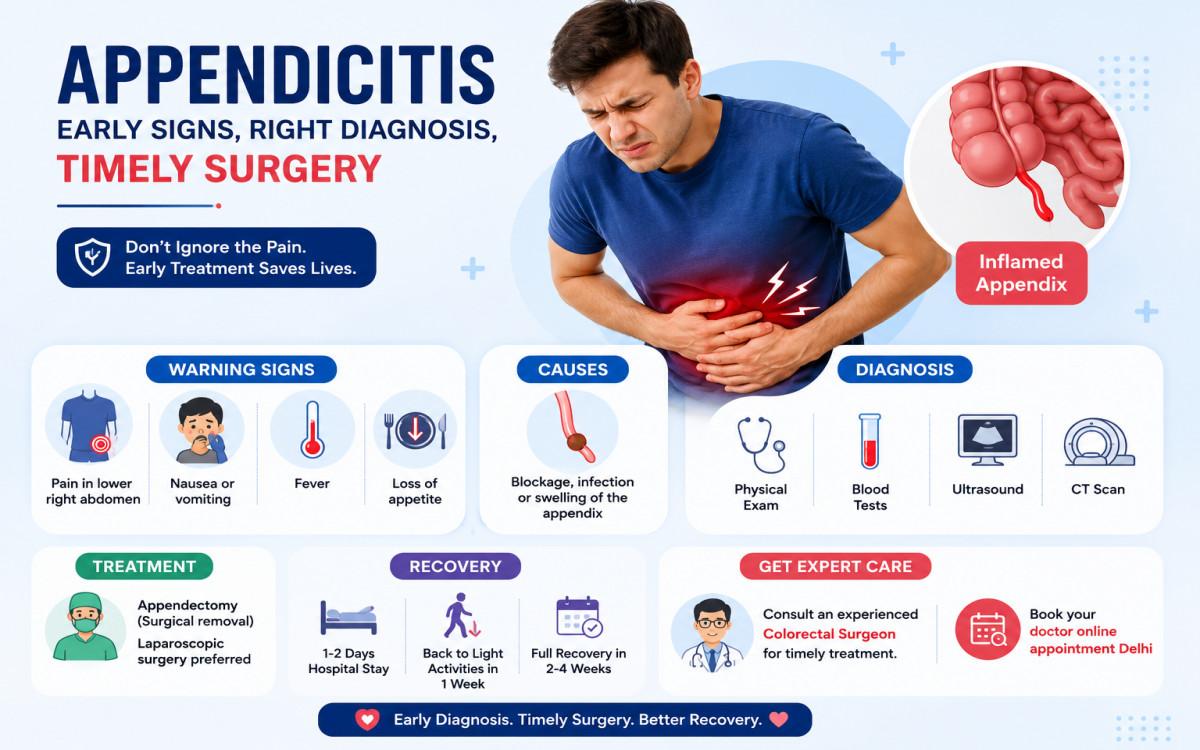
Abdominal pain is one of the most common complaints for which people visit their physician or hospital. However, despite the fact that it is mostly associated with minor health problems related to the gastrointestinal tract, in some instances, intense pain in the lower part of the right side of the abdomen can be a sign of appendicitis—a potentially fatal disease.
The disease develops because of the inflammation or infection of the appendix and, without proper treatment, it may cause rupture of the organ and development of potentially fatal complications including peritonitis and abscess formation. Fortunately, proper diagnosing and operation can save patients' lives in the majority of cases.
In the current blog post, we will analyze warning symptoms, causes, diagnosis methods, and treatment options of the disease.
What Is Appendicitis?
The appendix is a small, tube-like sac that attaches to the colon on the lower right side of the abdomen. While it is not well known what its exact role is, experts say that it could have a small function in enhancing immunity and promoting healthy intestinal bacteria.
Appendicitis occurs when the appendix becomes inflamed, infected, and gets blocked. The condition causes inflammation in the walls of the appendix, resulting in pressure building up within the appendix.
If it bursts, the bacteria in the appendix are released into the body. It is due to this reason that appendicitis is regarded as an emergency case requiring surgery.
Because abdominal pain can also occur due to conditions requiring Hernia surgery, kidney stones, or gastrointestinal infections, it is important to get an accurate diagnosis instead of assuming the cause. Early medical evaluation helps ensure the right treatment.
Warning Signs of Appendicitis
Detecting the signs in advance will be crucial for successful treatment.
1. Navel Region Pain
Among the initial symptoms of appendicitis, there is mild pain in the navel region. Over time, within several hours, the pain spreads to the lower abdomen's right side.
2. Intense Lower Right Abdomen Pain
Over time, the feeling of discomfort gets more severe. Simple activities like walking, laughing, or even moving can exacerbate pain in appendicitis.
3. Loss of Appetite
People suffering from appendicitis tend to feel a loss of appetite for food, even when they were used to eating normally.
4. Nausea and Vomiting
Among the other symptoms is feeling nauseous soon after experiencing abdominal pain or vomiting.
5. Low Temperature
In the beginning, patients suffer from low temperature which may get much higher when the appendix bursts.
6. Abdomen Swelling
Sometimes the patient feels that the abdomen is swollen.
7. Constipation or Diarrhea
Digestive problems like constipation, diarrhea, and inability to pass gases are the common signs of appendicitis.
8. Abdomen Pain While Moving
Even simple actions like standing up, walking, laughing, or coughing may increase the pain in the abdomen.
What is the Cause of Appendicitis?
While there may be various reasons, appendicitis occurs as a result of the blockage of the opening of the appendix.
The possible causes of appendicitis include:
-
Blockage of the appendix by hardened stool
-
Infection caused by bacteria or viruses
-
Blockage caused by swollen lymphoid tissue
-
Parasites within the intestine (very rare)
-
Abdominal trauma
-
Tumor growths (very uncommon)
Who Is At Increased Risk?
Anyone can have appendicitis, but there are some people who are at an increased risk of developing the disease.
The risk factors are:
-
Age 10-30 years
-
Family history of appendicitis
-
History of abdominal infections
-
Some specific infections of the gut
-
Poor fiber diet
Without any of these risk factors, one may still get appendicitis unexpectedly.
Appendicitis Diagnosis Procedures
Timely identification reduces risk factors and allows prompt treatment.
Some of the diagnostic procedures include:
Physical Exam
Through a physical exam, the doctor presses on different areas of the abdomen in order to determine tenderness, especially the lower right quadrant.
Blood Tests
The tests will help the doctors find out the level of white blood cells that indicate the infection.
Urinalysis
This is done to exclude possible infection of the urinary tract or the presence of kidney stones.
Ultrasound
The ultrasound examination is widely used, mostly in case of children and pregnant women.
CT Scan
CT Scan gives more precise images of the condition and is regarded as the most precise test to diagnose appendicitis.
MRI
In case of pregnancy, an MRI can be applied.
An experienced GI specialist or Bariatric Surgeon can evaluate abdominal pain, perform the necessary diagnostic tests, and recommend the most appropriate treatment based on the severity of appendicitis.
Appendicitis Treatment Options
Treatments vary depending on the seriousness of the disease.
Antibiotics
For certain cases of uncomplicated appendicitis, the disease can be treated by using antibiotics in the short-term. But surgery is generally recommended since the disease tends to come back.
Surgical Treatment for Appendicitis
Surgical removal of the appendix is the most reliable way to treat appendicitis.
There are two forms of the procedure:
Laparoscopic Appendectomy
During this procedure, the appendix is removed through several small incisions and the aid of a camera.
Advantages of this method are:
Small scars
Pain
Quicker recovery
Reduced chances of infection
Shorter hospital stay
Open Appendectomy
When the appendix has burst or there is a severe infection, open appendectomy is required.
Complications in Case of Untreated Appendicitis
The failure to treat appendicitis may result in various health problems.These may be:
-
Rupture of the appendix
-
Peritonitis (inflammation of the abdominal wall)
-
Abscess in the abdomen
-
Sepsis
-
Increased hospitalization time
-
More complicated surgery
Timely consulting a doctor minimizes the chances of these problems occurring.
Recovery From Appendectomy Surgery
Recovery depends on what kind of surgery was performed and if the appendix had ruptured.
Generally, patients can look forward to:
-
Discharge from hospital within 1-2 days following laparoscopy
-
Back to light activities within 1 week
-
Full recovery within 2-4 weeks
-
Extended recovery period if open surgery is performed or there was a rupture
In the course of the recovery process, patients need to:
Take medications as prescribed
Avoid lifting anything heavy
Drink plenty of fluids
Consume a well-balanced diet
Keep all appointments
Following the advice of your surgeon will help you recover successfully.
When Do You Need a GI Surgeon?
Do not neglect severe stomach pains.
See a GI surgeon or Colorectal Surgeon if you have:
-
Pain in the lower right side of the stomach
-
Increasing pain
-
Vomiting continuously
-
A fever with pain in the stomach
-
Severe tenderness on the abdomen
-
Inability to walk due to the pain
-
Stomach swelling
-
Pain for several hours without any improvement
Early consultation may help prevent your appendix from bursting,.
Can Appendicitis Be Prevented?
Appendicitis cannot be prevented for sure. However, the maintenance of good digestive health might aid in improving intestinal functioning.
Healthy practices include:
-
Consumption of fiber-rich foods like fruits and vegetables
-
Consumption of adequate amount of water
-
Engagement in physical activities
-
Treatments for gastrointestinal infections
-
Prevention of constipation
Despite these healthy practices, there is no complete guarantee of preventing appendicitis.
Frequently Asked Questions (FAQs)
1. What is the initial symptom of appendicitis?
It is characterized by the presence of abdominal pain near the umbilicus, which will eventually move to the right part of the lower abdomen.
2. Does appendicitis constitute an emergency situation?
Yes. Due to the potential for the appendix to burst, it is advised to seek immediate medical attention.
3. Can one manage appendicitis without surgery?
Although antibiotics are used in certain non-complicated cases, surgery is the best and safest way of dealing with it permanently.
4. Is laparoscopic appendicitis surgery dangerous?
No. It is regarded as safe, and it is highly preferred because of its quick recovery, less pain, and low scarring.
5. How long does it take to recuperate from surgery?
One can recuperate from surgery in a period of 2–4 weeks.
Conclusion
Appendicitis is an extremely dangerous disease that must never be neglected. The early warning signs of appendicitis include pain shifting to the right lower side of the abdomen, nausea, fever, and lack of appetite. In case you are experiencing some symptoms of this disease, consult your physician without delay in order to get timely treatment.Current appendicitis operations, especially laparoscopic appendectomy, are efficient and safe procedures with a good outcome and quick recovery. Thus, if you have some issues concerning your abdomen, consult your physician immediately in order to avoid complications like a ruptured appendixif you notice persistent abdominal pain or other warning signs of appendicitis, do not delay medical care. You can book a doctor online appointment Delhi to consult an experienced GI specialist and receive timely diagnosis and treatment.