
Liver Cancer and Cirrhosis: Is There a Connection? Causes, Warning Signs and Treatment
Published on 29 Aug 2026
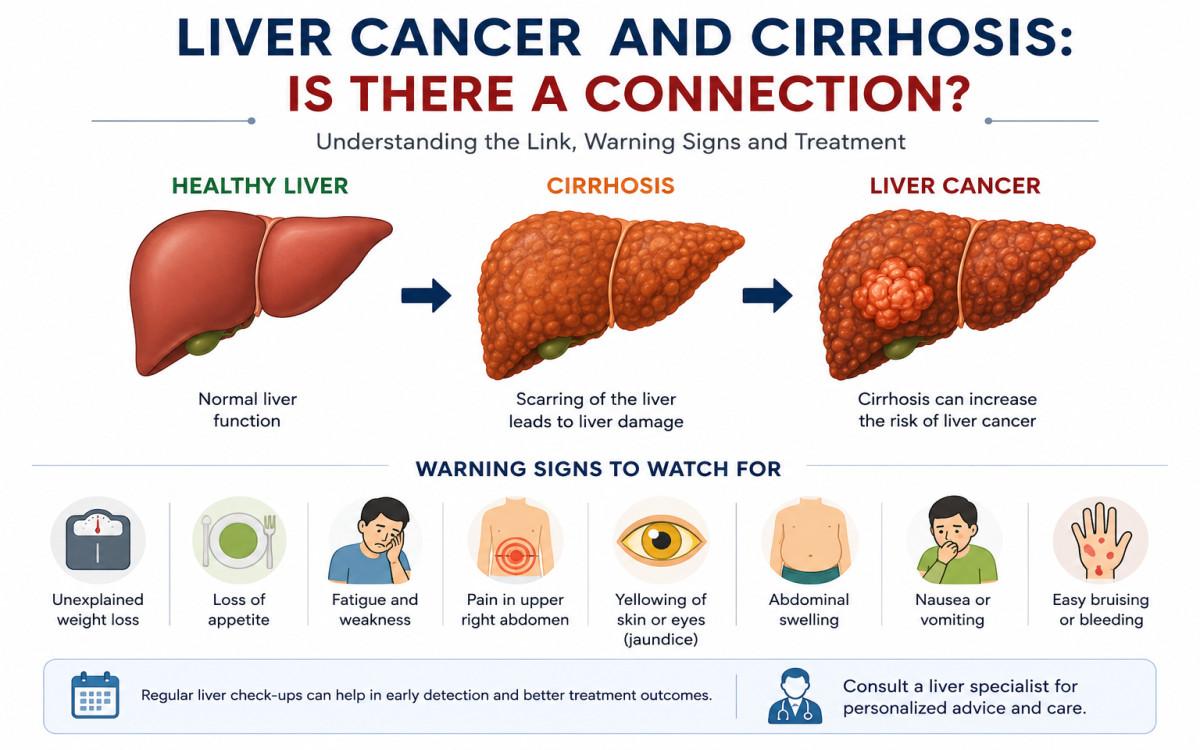
Cirrhosis and liver cancer are viewed by many people as totally unrelated liver diseases. There is a potential link between the two diseases that may be vital to consider.
Cirrhosis is a condition which leads to irreversible scarring of the liver and develops due to a number of liver disorders, such as chronic viral hepatitis, alcohol-induced liver disease, and metabolic liver disease. Moreover, cirrhosis is a known risk factor for development of hepatocellular carcinoma – a type of primary liver cancer.
The knowledge of this link can be helpful for people with chronic liver disease in recognizing the signs of the disease.
Cirrhosis Overview
Cirrhosis is the process where damage sustained by the liver repeatedly or persistently leads to the creation of scar tissue.
With continued scarring, the liver will lose its ability to carry out various functions such as:
The processing of nutrients
The production of bile
The removal of waste products from the blood
The production of proteins that aid in blood clotting
The support of metabolism
In most cases, cirrhosis does not exhibit any signs at its early stages.
Relationship Between Cirrhosis and Liver Cancer
Liver damage can be one of the factors increasing the risk of development of liver cancer.
For example, patients with cirrhosis have a high probability of getting hepatocellular carcinoma (HCC), the main form of liver cancer in adult patients. Liver damage from chronic hepatitis B or C infection, alcohol, and some metabolic disorders can predispose an individual to increased cancer risk.
It should be noted, though, that the presence of cirrhosis alone is not an indication of liver cancer development.
The main thing here is that individuals with a higher risk should undergo appropriate surveillance and testing in order to diagnose suspicious changes at an early stage. This is especially relevant for high-risk patients, where periodic ultrasound and AFP testing can be recommended.
Which Symptoms Should You Be on the Lookout For?
The early stages of liver cancer might not have any apparent symptoms. However, when the symptoms become evident, they might sometimes be similar to symptoms of other diseases affecting the liver or the digestive system.
Some of the symptoms that might appear include:
Weight loss without any known reason
Decreased appetite
Fatigue
Upper right abdominal pain
Abdomen bloating
Jaundice (yellowing of the skin or the whites of the eyes)
Nausea or vomiting
Feelings of fullness after having a small meal
Bruising easily and bleeding
Diagnosis of Liver Cancer
In the case of suspected presence of liver cancer, the diagnosis will entail the use of medical history, physical examination, laboratory testing and imaging.
As per the need of the case, the physician will advise for one or more of the following:
Ultrasound
Ultrasound can detect any mass within the liver and is used for surveillance among high-risk individuals.
CT/MRI Scan
Advanced imaging can give further information regarding the size and location of the liver lesion.
Laboratory Testing
Laboratory tests such as liver function test and tumour markers like AFP can be performed.
The specific method of diagnosis will depend on the history and imaging results.
What are the available Treatments for Liver Cancer?
Treatment does not remain same for all cases. It depends upon various factors including the size and location of the tumour, if the tumour has spread, the function of liver and general health of the patient.
Based on the unique case, it can include:
Surgery
Ablation
Therapies based on Embolization
Radiation Therapy
Targeted drugs
Immunotherapy
Liver transplantation
In selected patients, surgery or transplantation provides curative treatment option.
When Is a Liver Transplant Indicated?
In some cases, a Liver Transplant is indicated where the tumour cannot be removed in a safe manner without affecting the ability of the liver to function properly, especially if there is associated liver disease.
The transplant removes the diseased liver and treats the liver failure as well as the cancer, depending on which patients have been carefully selected.
It should be understood that just because a patient has liver cancer, does not mean that transplantation is mandatory.
The Importance of Liver Monitoring
Individuals who have been diagnosed with liver problems must not delay consulting a doctor until their symptoms become serious.
Liver monitoring can enable physicians to:
Check liver function
Track the progression of liver disease
Evaluate the possibility of cancer
Find suspicious liver lesions
Determine if more imaging tests are needed
Provide a discussion on treatment options
Patients who are already diagnosed with cirrhosis, chronic hepatitis or an abnormal liver image will benefit from speaking to a liver specialist Delhi about proper monitoring.
When is it Time to See a Specialist?
You may need medical consultation if you suffer from continuous abdominal pain, unexpected weight loss, jaundice, abdominal distension, poor appetite, and abnormal liver test values.
You also need to consult a specialist if you have already cirrhosis or some other kind of liver disease that needs regular monitoring of your liver.
In case you are unable to reach a hospital, you can opt for doctor online appointment delhi to talk about your symptoms and previous reports and if there is any need for physical examination and tests.
Can Liver Cancer be Prevented?
Prevention is not possible in all cases of liver cancer, although prevention of unnecessary damage to the liver can decrease one’s risk.
Effective strategies include:
Treatment of chronic hepatitis under medical supervision
Maintaining a healthy body weight
Control of diabetes and metabolic conditions
Stopping smoking
Decreasing exposure to alcohol
Following the recommendations of your doctor regarding liver conditions
Making regular follow-up appointments
Liver cancer risk can also be decreased by treatment of chronic hepatitis and decreasing cirrhosis risk factors.
Frequently Asked Questions
1. Does cirrhosis always lead to liver cancer?
No. While cirrhosis raises the risk of developing liver cancer, there are cases where a person with cirrhosis does not get liver cancer.
2. Can liver cancer be managed without surgical intervention?
Yes. Depending on the case and circumstances of the patient, the management options can be surgery, ablation, embolization, medicines, radiotherapy and immunotherapy.
3. Is Liver Transplant necessary for liver cancer?
No. Liver transplant is indicated in some patients only. It depends on the factors of the case including tumor behavior, liver function and overall patient condition.
4. Can liver cancer be diagnosed early?
It is hard to detect liver cancer at an early stage because this condition can be asymptomatic. Early diagnosis of this condition is possible in high-risk individuals as recommended by the physician.
5. When should I visit a liver specialist?
A consultation with a liver specialist should be considered in case of chronic liver diseases, cirrhosis, liver tests abnormalities, jaundice, unexplained weight loss, abdominal distention or suspicious liver lesion.
Conclusion
There is a connection between cirrhosis and liver cancer, but one does not lead to the other. The important thing is to get an early diagnosis so that the right form of treatment may be undertaken.
If you suffer from chronic liver disease, abnormal liver function tests or an abnormality in your liver, do not hesitate to consult a specialist for an evaluation and to see which treatment plan would suit you best.