
Hernia Surgery: When Do You Need It? Symptoms, Treatment and Recovery
Published on 26 Aug 2026
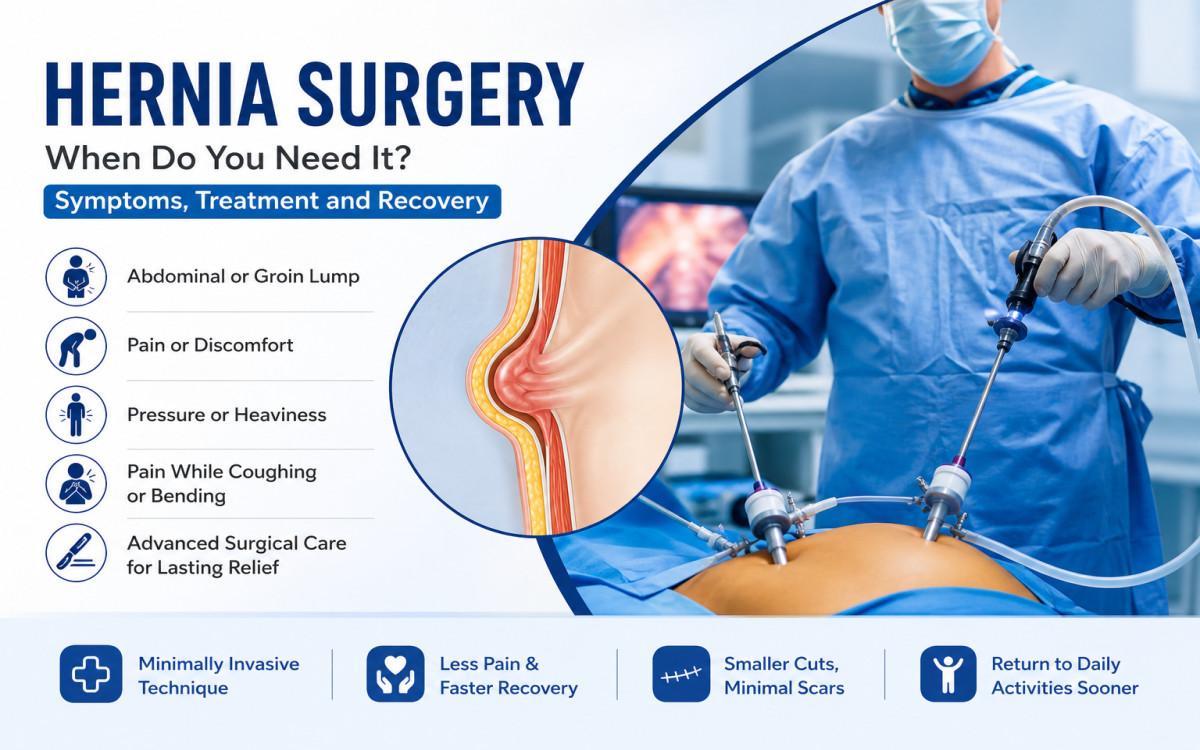
A hernia is a situation where an internal organ or tissue protrudes through a weakened part of the muscle or tissue that surrounds it. The initial presentation might be a small bulge or swelling, although some cases of hernias might progress to become painful or complicated.
For individuals with persistent swelling, pain, or discomfort near the abdominal or groin areas, a doctor can examine their condition to establish if they need Hernia surgery.
What Is a Hernia?
A hernia is an abnormal condition where tissue bulges through a weak spot in the abdominal muscle wall. Hernias usually happen in the abdominal area or the groin and can worsen when you are in a standing position, when you cough, lift something heavy, or strain yourself.
Types of hernias include:
Inguinal hernia
Umbilical hernia
Incisional hernia
Femoral hernia
Hiatal hernia
Hernias can either be painless or painful depending on the type.
Hernia Symptoms: What Are the Most Frequent?
Depending on the place and size of the hernia, the symptoms may differ.
They may involve:
A lump in the abdomen or groin region
Pain when lifting something or exercising
Feeling pressure or heaviness
Painful burning sensation or ache near the hernia
Pain while coughing or bending
The growing size of the bulge
If there is sudden pain, the bulge is hard and cannot be pushed back, you need to seek emergency care.
When Should You Have Hernia Surgery?
Hernia operations are not always needed as soon as a person experiences them. It all depends on such criteria as the nature and size of the hernia, symptoms, health status, etc.
Hernia surgery will probably be required if:
The patient experiences painful sensations
The swelling continues to grow
Activities of the patient become complicated due to a hernia
The hernia recurs
There is a possibility of an obstruction or strangulation
The hernia does not go back into the body
This decision is made by a doctor who examines the patient.
Is Laparoscopic Surgery Used for the Repair of Hernias?
Yes. Laparoscopic hernia repair is a form of surgery done by using the minimally invasive approach for some people.
The method involves the use of small incisions rather than a single large cut to perform the procedure. There will be use of special equipment to repair the damage part of the abdomen. Surgical mesh might be implanted to help strengthen the weak area.
Individuals looking for a Laparoscopic Surgery Doctor in Greater Noida can ask about the appropriateness of using minimally invasive surgery for their particular type of hernia.
Some of the benefits associated with laparoscopic surgery could be:
Small cuts
Reduced pain after surgery
Fewer scars
Ability to walk sooner
Quick resumption of daily activities
Nevertheless, it is important to note that all patients cannot be treated through laparoscopic surgery.
What Occurs in Hernia Surgery?
Before the operation, the patient may go through clinical testing, and at times imaging scans.
In this surgery, the surgeon places the dislodged tissues back into place and fixes the weak abdominal muscles. At times mesh repair can be done depending on the type and size of the hernia.
This operation is carried out using either general or regional anesthetic depending on how the surgery is being done.
What Is the Experience after Hernia Surgery?
Every patient recovers differently depending on the method used for surgery and the patient’s health.
After the surgery, the patient is supposed to:
Comply with the surgeon’s guidelines concerning wound care
Take the medicine prescribed by the doctor
Take walks as advised
Steer clear of strenuous exercises until the doctor says it is okay to begin
Resume regular activities slowly
Have follow-up visits to the hospital as arranged
Patients should generally avoid heavy lifting until the doctor confirms it is fine to begin doing so.
Is Recurrence Possible in a Hernia Post Operation?
Despite the aim of surgery being a permanent solution for patients, the condition of hernia recurrence can arise in some individuals.
This might be because of factors including:
Nature and magnitude of the hernia
Operation process used
Obesity
Smoking
Coughing frequently
Straining through constipation
Incompetent wound healing
Previous surgeries for hernia
Observance of postoperative guidelines and living a healthy lifestyle would help in recovery.
When Do You Need to Visit the Surgeon?
Do not neglect a hernia just because you do not have any pain associated with it yet. A surgical assessment will determine what to do with it.
Visit your doctor right away if the hernia has become suddenly painful, swollen, hard, discolored, and does not go back to its place especially if it is accompanied by nausea, pain in the abdomen, or inability to defecate and expel gas.
If you want to find an online appointment delhi for the doctor, an online consultation could be a good start in determining what you should do next.
If you have symptoms that affect other systems of the digestive tract, then the treatment could also include a visit to a Colorectal Surgeon.
Frequently Asked Questions
1. Does every hernia need to be surgically repaired?
No. Small or less symptomatic hernias can be monitored. The surgery is recommended based on the symptoms, size, complications, or the likelihood of complications.
2. Is the laparoscopic surgery of the hernia safe?
It is one of the most common approaches used to repair the hernia surgically. However, any kind of surgery has its risks, and whether it is suitable or not depends on the patient's medical condition and the type of hernia.
3. How much time is needed for recovery from hernia surgery?
It takes different time for recovery depending on the kind of surgery and personal health status of the patient. Most patients usually slowly regain their normal activity within a few weeks.
4. Is there any chance that a hernia will recur even after surgical intervention?
Yes, there is always a possibility of recurrence, but hernia repair is supposed to ensure lasting results. Adhering to postoperative recommendations and dealing with problems such as being overweight, smoking, chronic cough, and straining can prevent this.
5. What signs indicate that a hernia needs emergency treatment?
The presence of sharp pains, hard or discolored hernia, inability to push it back into place, vomiting, and problems with digestion show that immediate medical care is needed.
Conclusion
Hernias can be presented initially as small and painless swelling. However, it is not a condition which can be ignored if there is any pain, enlargement, and discomfort during routine activities. The early medical evaluation can help decide on further actions - if observation or hernia surgery is needed.
In some cases, there are techniques of minimally invasive procedures which can offer a solution for hernia treatment.you can consult to doctor online appointment delhi .