
How Is Liver Disease Diagnosed? Tests, Warning Signs and When to See a Specialist
Published on 11 Sep 2026
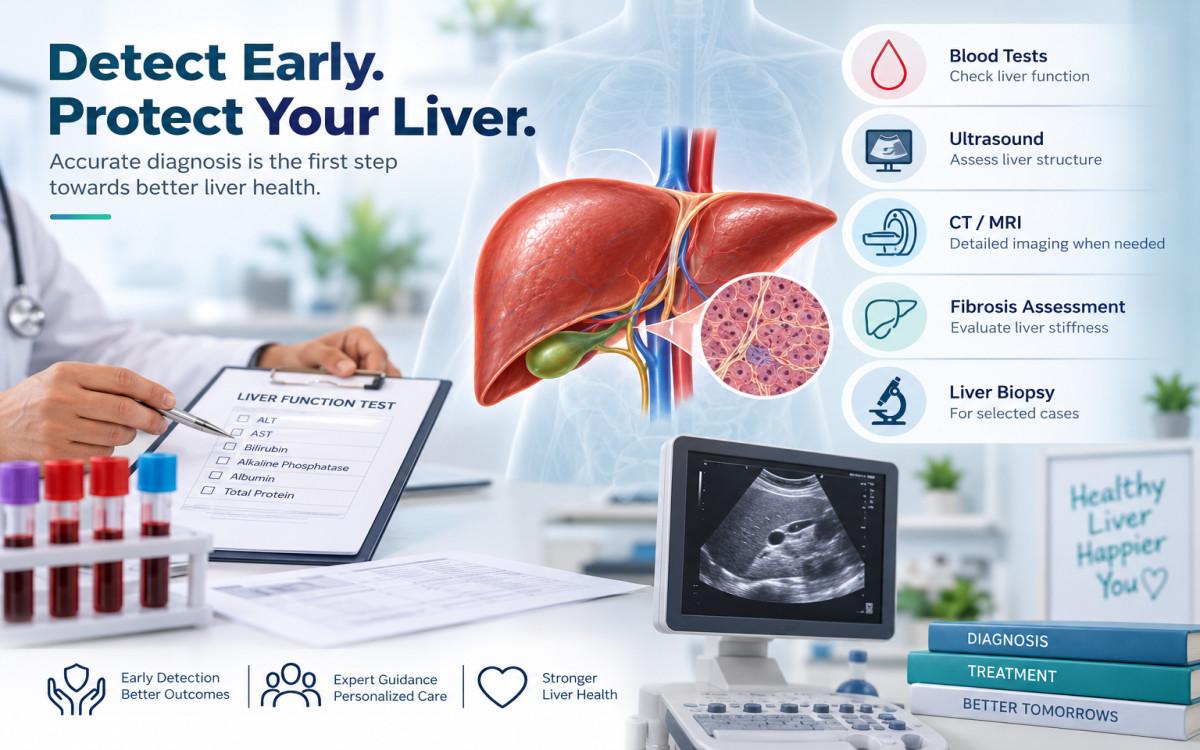
Liver disorders do not necessarily have visible signs in their early stages. Some individuals find out about the condition when undergoing a blood or ultrasound test whereas others visit the hospital when they develop visible symptoms like jaundice and abdominal swelling.
Since there are different liver disorders that are slow to advance, the diagnosis becomes very crucial. The diagnosis process involves the history of the individual as well as physical exam, blood tests and imaging procedures to determine the functionality and structure of the organ.
It is very essential for patients to learn about the process of diagnosing liver disorder.
What Are Some of the Most Common Symptoms of Liver Disease?
Liver diseases show various symptoms based on the cause and the level of the disease progression. Some people do not experience any symptoms at the initial stages.
They may include:
Fatigue
Lack of appetite
Nausea
Abdominal pain and discomfort
Yellow skin and/or yellowing of the whites of the eyes
Dark urine color
Abdominal swelling or leg swelling
Weight loss
Itching
Easy bruising
This list includes various illnesses' symptoms, and does not necessarily indicate a liver problem. Further diagnosis is required to establish the reason for the symptoms.
1. Medical History and Physical Examination
The first step in the process of diagnosis is often a comprehensive consultation regarding the symptoms and medical history of the patient.
The physician may inquire into:
Prior liver problems
Alcohol intake
Use of medications or other supplements
Liver disease in the family
Any prior hepatitis infection
Obesity and diabetes or metabolic disorders
Prior abdominal surgeries
Weight gain or loss and changes in appetite
Physical examination may also be done to find any signs like jaundice or enlarged liver.
Such an initial evaluation will help to determine the appropriate tests.
2. Liver Function Blood Tests
Liver health status can be evaluated by means of blood tests.
The liver panel may consist of the following tests:
- ALT
- AST
- Bilirubin
- Alkaline phosphatase
- Albumin
- Total protein
In addition to these tests, there may be some others recommended by doctors based on the symptoms of the patient.
It should be noted that the result of an abnormal liver test is not always a sign of significant liver damage. The opposite is also true – normal test results do not exclude all possible liver disorders.
3. Ultrasound and Other Imaging Procedures
An imaging study may give insight into the size and structure of the liver and adjacent organs.
An abdominal ultrasound scan may be able to show:
Fat deposits
Liver enlargement
Cysts
Stones in gallbladder
Specific growths or lesions
Diseased bile ducts
Based on the situation, a CT or an MRI may be ordered for more detailed imaging.
It all depends on what the doctor wants to examine.
4. Fibrosis and Liver Stiffness Evaluation
Persistent inflammation of the liver can lead to fibrosis, which is an accumulation of scars.
For some patients, there are methods that may assist in the evaluation of liver stiffness. Tests like elastography, for example, may give information about fibrosis without involving any surgery.
This could be especially useful when diagnosing chronic liver diseases and assessing whether scarring is present
5. Who Needs a Liver Biopsy?
Liver biopsy includes the extraction of a small sample of liver tissue for a microscopic evaluation.
This test is not necessary for all patients who have been diagnosed with a liver disorder. Sometimes, a liver biopsy may become useful when a patient needs further investigation or another test cannot provide a proper diagnosis.
This depends on the patient’s situation.
Early Assessment Is Critical
There are various types of liver diseases that develop without presenting any symptoms at all. It is therefore important to conduct early assessment to detect any issues that might be treatable.
Some of these include conditions such as metabolic diseases which result in fatty liver diseases while chronic viral hepatitis as well as other inflammatory diseases can cause progressive liver scarring.
Identifying the root cause of the problem is therefore very important in treating the problem.
When searching for a liver specialist delhi, the focus should be on finding a good specialist who will evaluate your symptoms and advise you accordingly.
When Do You Need to See a Liver Specialist?
You should consider seeing a liver specialist when you have:
Abnormal liver function test results
Jaundice
Hepatitis infection
Suspected cirrhosis or cirrhosis already diagnosed
Significant fatty liver with risk factors
Liver lesions of unknown nature
Recurrent abdominal symptoms related to the liver or bile
Family history of particular liver diseases
Already been diagnosed with liver disease that requires specialist assessment
It is however up to you to know what type of specialist to consult depending on your particular problem.
When Is a Hepatobiliary Surgeon Required?
Hepatobiliary surgeons treat surgical disorders related to liver, gallbladder, and bile ducts.
Some liver tumors, bile duct disease, complicated gallbladder conditions and others may require surgical intervention, in which case a consultation can be considered.
A hepatobiliary surgeon might be needed for complicated surgical planning and transplant evaluation too.
In case you have searched for Dr Amit Jain hepatobiliary surgeon Delhi, it is worth knowing that any treatment suggestions must be based upon the diagnosis, tests, and overall patient's health condition.
Does Every Liver Disease Require Surgery?
Not every.
There are many liver conditions that can be treated without surgery. The treatment method is determined by the cause, severity and development of the disease.
Depending on the diagnosis, it can involve:
Life-style changes
Dietary changes
Medications
Treatments of underlying infections
Monitoring
Endoscopy
Interventional radiology
Surgery
Liver transplantation for selected patients
The goal is to select the right treatment for the disease, not to assume the necessity of surgery.
What if Liver Disease Is at Advanced Stage?
For those who have a severe, untreatable condition where liver disease has caused serious organ damage, there is a possibility that you could face liver failure or some other form of complication.
Liver transplantation is one possible treatment option for patients having advanced stages of liver disease, but only after a very careful selection of cases.
The transplant evaluation is a procedure that includes assessing many things like your liver function, general well-being, disease, suitability for a transplant etc.
For those searching for a liver transplant specialist Dr Amit Jain, remember that you cannot determine if you are eligible for liver transplant by doing online research alone. Clinical evaluation and certain tests must be done.
Can You Meet a Specialist Online?
It may be helpful to discuss your symptoms, past reports and whether an evaluation by a specialist or further testing needs to be conducted.
If you are looking for a doctor online appointment Delhi and your symptoms do not need an emergency consultation, then you may choose an online consultation if you already have some blood test reports, scans or past medical history that you can discuss.
What is Needed Before a Liver Consultation?
Before the consultation, it may be helpful to bring with you copies of:
Prior blood tests results
Ultrasound / CT/MRI scan results
Prior medications
Information on current medications and supplements being taken
Prior biopsy results, if any
Any details of prior surgeries on liver/abdomen
You should also write down when your symptoms first appeared and if there have been any changes since then.
Frequently asked questions
1. Is there such thing as asymptomatic liver disease?
Yes. There might be cases wherein a person suffers from liver diseases without showing any signs and symptoms. This is one way that some liver diseases could be discovered through blood work or imaging.
2. What are the common blood tests for liver function?
ALT, AST, Bilirubin, Alkaline Phosphatase, Albumin among others
3. Does every case of fatty liver disease progress into cirrhosis?
No. Every case of fatty liver does not always progress into cirrhosis. It depends on various factors including the cause, inflammation and fibrosis of the liver.
4. When is it time to see a liver specialist?
Those with abnormal liver tests, jaundice, known liver diseases, cirrhosis and other suspicious liver imaging results might want to visit a liver specialist.
5. Is surgery always necessary in patients with liver disease?
No. Not all patients with liver disease are required to have surgery. Some cases of liver disease only require monitoring and lifestyle modifications as well as medicines.
Conclusion
A liver condition might be something that needs regular monitoring or something that requires proper treatment. Since some liver conditions may go undetected for quite some time, a proper evaluation may play a vital role in keeping the liver healthy.
Various diagnostic methods like blood test, ultrasound, CT scan, MRI, elastography, and biopsy in certain cases can help in understanding what is going on in the liver.
If you experience any unusual symptoms and have abnormal test results concerning your liver, consult with a professional doctor before trying to analyze your lab results by yourself.