
Can Fatty Liver Turn Into Cirrhosis? Understanding the Stages of Liver Damage
Published on 19 Aug 2026
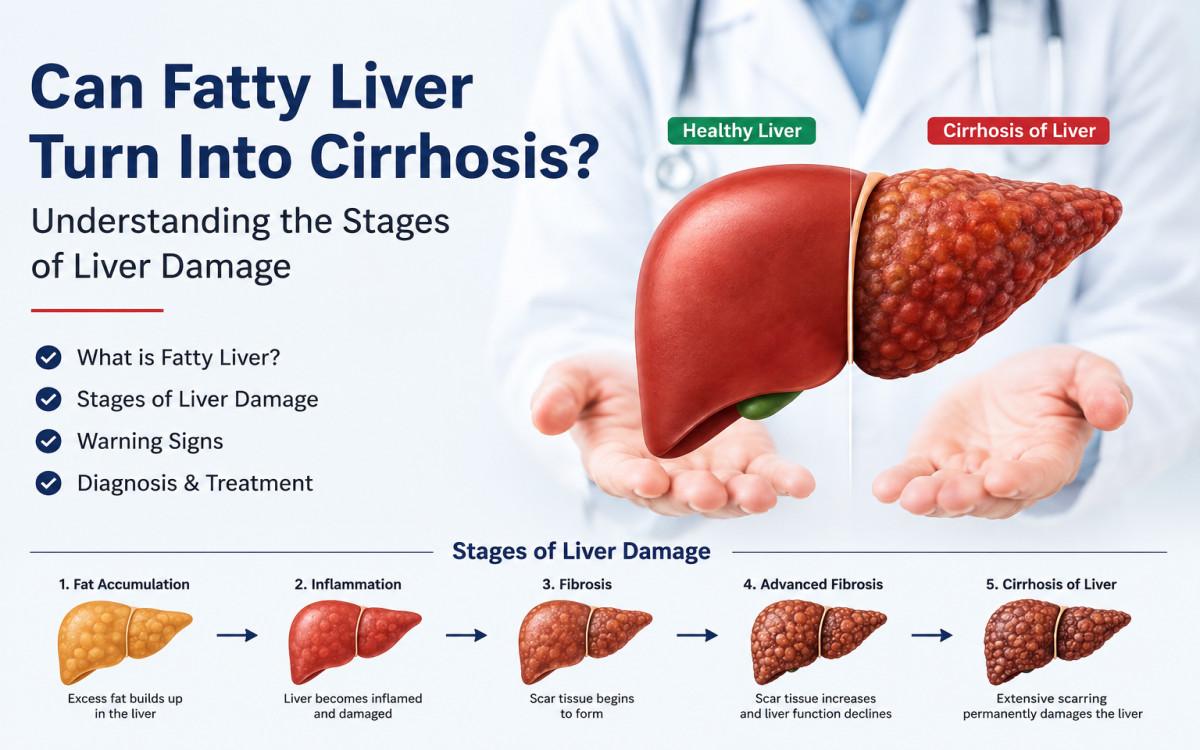
More cases of fatty liver are now being diagnosed during routine health screening using either ultrasonography or blood tests. Some individuals learn that they have fatty liver but have not had any symptoms at all. And there is one common concern about this: Will fatty liver eventually lead to liver damage?
In a straightforward response, fatty liver does not necessarily progress to Cirrhosis of liver. However, some individuals may develop scar tissue formation due to ongoing liver inflammation and injury.
This should be known in order for an individual to know about possible risk factors.
What Is Fatty Liver?
Fatty liver disease involves the accumulation of excess fat in the liver. There are a number of different factors that can lead to fatty liver disease, including metabolic disorders, obesity, insulin resistance, type 2 diabetes, high cholesterol or triglycerides, and alcoholic liver disease.
Fatty liver disease due to metabolic dysfunction (MASLD) is one example of a condition that causes fatty liver. The build-up of fat in many individuals may be quite stable and not necessarily damaging to the liver. However, in some cases, inflammation and liver damage may ensue.
Can Fatty Liver Cause Cirrhosis?
Yes, but fatty liver does not lead to cirrhosis in every patient.
Typically, the process relies on the development of inflammation and fibrosis. To put the stages of the condition in simple terms, they can be described as:
Fat deposition → Liver inflammation and damage → Fibrosis → Progressive fibrosis → Cirrhosis
Fibrosis is the stage where scar tissue is formed within the liver. Progressing fibrosis causes distortion of the liver structure, and cirrhosis occurs when the scar tissue is extensive and irreversible.
That is why the mere diagnosis of "fatty liver" may not be sufficient. Physicians will have to determine whether there is any evidence of liver fibrosis.
The Importance of Liver Fibrosis
Fat, per se, is not always the most reliable marker of the extent of damage that has been done to the liver.
There may be individuals who have a great deal of fat but minimal scarring, and others who have less visible fat but marked fibrosis.
It is for these reasons that assessment will involve laboratory and noninvasive procedures that allow for an estimate of the probability of advanced liver fibrosis. FIB-4 scores and imaging techniques like elastography may be used.
Liver Disease Risk Factors
Some risk factors increase the chances of the progression of fatty liver to advanced stages of liver damage.
The following may apply:
Obesity
Type 2 diabetes
Insulin resistance
Unusual amounts of cholesterol and triglycerides in blood
Metabolic syndrome
Further damage caused by alcohol
Other existing liver diseases
Personal and genetic risk factors
Having any of these risk factors doesn’t guarantee that cirrhosis is inevitable. It is worth undergoing additional medical evaluation for those with several risk factors.
Does Fatty Liver Have Symptoms?
The difficulty with fatty liver is that the condition might be silent.
A lot of patients have very minimal symptoms or no symptoms at all in the beginning stages. These include:
Fatigue
Feeling of discomfort in the right upper side of the abdomen
Lack of energy
Liver function tests that come out abnormal
Since symptoms do not always occur, going by the way one feels is not an effective method of diagnosing liver disease.
What are the Warning Signs of Severe Liver Disease?
As there is damage to the liver, the following are the possible warning signs that may occur.
The eyes and skin turn yellow.
Abdominal swelling.
Legs or ankles are swollen.
There is an easy bruising and bleeding.
Weight loss occurs without any cause.
A loss of appetite.
Weakness.
Confusion.
There are various causes for the above signs, but they cannot be considered as signs of cirrhosis immediately.
Fatty Liver Assessment
Various types of information might be considered by a doctor rather than using one type of test only.
Blood Tests
The presence of ALT and AST, the levels of which may indicate liver damage, might be included among the blood tests. Moreover, various other blood tests may provide information related to the state of a patient’s liver.
For some patients, blood tests may also allow calculating the risk of fibrosis using indices such as FIB-4.
Abdominal Ultrasound
Abdominal ultrasound is used to see if there is any accumulation of fat in the liver.
Nevertheless, a regular ultrasound is unable to measure the degree of fibrosis, and thus additional tests are needed in case of suspected advanced liver disease.
Elastography
Elastography is a non-invasive method for measuring the level of liver stiffness and the increased level of stiffness might indicate fibrosis.
Liver Biopsy
All patients with fatty liver do not require a biopsy, but sometimes it might be used to measure liver damage.
Is It Possible To Decrease The Risk Of Liver Damage?
It all depends on the cause and stage of liver disease.
In the case of metabolic fatty liver disease, dealing with metabolic risk factors is one of the ways how to manage the condition. These can include improvement of nutrition, increasing exercise, proper weight, as well as conditions like diabetes and high cholesterol.
It is vital not to use any supplements or medications sold as "liver cleaners" without consulting with a healthcare provider. Some of the supplements can cause liver damage themselves.
In case alcohol use is a cause of liver disease, it is important to follow the advice of the doctor.
Why Should You Visit a Liver Specialist?
Liver specialist consultation is indicated for patients with abnormal liver test results, non-alcoholic fatty liver disease (NAFLD) with a number of metabolic abnormalities, suspected fibrosis, presence of symptoms of advanced liver disease, or established chronic liver disease.
A liver specialist can help in finding out the reasons for your problem, reviewing prior test results, calculating your probability of developing fibrosis, and decide whether further tests are needed or specialist therapy is indicated.
Patients who wish to find a liver specialist in Delhi may want to focus on those who have experience in treating complicated cases of liver disease including advanced fibrosis, cirrhosis, liver tumors, and transplantation problems.
Can Cirrhosis Be Prevented?
It isn't possible to prevent all causes of cirrhosis; however, early diagnosis of any liver disease might assist in lowering risks in many instances.
The following measures will help:
Keeping a healthy weight
Exercising regularly
Taking care of diabetes and sugar levels
Checking the levels of cholesterol and triglycerides
Using minimal medications or dietary supplements
Avoiding alcohol if necessary
Regular follow-ups for abnormal liver tests
Evaluation for any symptoms persisting over time
Early detection of any liver disease will open the doors for treatment of its cause and monitoring of progression.
Frequently Asked Questions
Does every patient with fatty liver progress to cirrhosis?
Not always. The risk of progression varies among patients depending on inflammatory processes, the presence of fibrosis, metabolic disorders, and other causes of liver damage.
How long does it take for the progression from fatty liver to cirrhosis?
The period is individual and can vary from one person to another. There is no specific period during which liver disease progresses into fibrosis or cirrhosis.
Is fatty liver reversible?
Improvement is possible if the disease is at an early stage and the cause and metabolic risk factors are successfully controlled.
Is fatty liver dangerous even if there are no symptoms?
Absence of symptoms doesn’t mean absence of liver damage. There are types of fatty liver diseases that have no symptoms, but the development of fibrosis is possible.
When should I consult a hepatologist?
You should visit a doctor in case you have abnormal liver test results, fatty liver with risk factors, fibrosis or cirrhosis suspicions, or jaundice, abdominal distention, unintentional weight loss, or fatigue.
How can I get a liver specialist delhi for fatty liver?
People seeking a liver specialist delhi must choose a specialist with adequate experience in dealing with fatty liver, liver fibrosis, cirrhosis, and any other chronic diseases of the liver. The specialist will examine your medical history and tests and advise you accordingly.
Conclusion
Fatty liver does not necessarily constitute a severe condition that cannot be turned around, but neither can it be neglected in every situation. Chronic inflammation in some individuals can result in fibrosis and ultimately in cirrhosis.
What matters is being able to differentiate between just having excess fat in the organ and signs of any liver damage or scarring. Tests of blood, imaging, as well as elastography or other examination procedures, can provide information about the state of your liver.
Should you be experiencing fatty liver disease or abnormalities in your liver tests, a consultation with a suitable specialist would allow you to evaluate your risks and decide on any testing that might be needed.
Medical Disclaimer: This article has an educational purpose only and does not serve as an alternative to a personal medical consultation, examination, or a treatment plan. Proper tests and treatment depend on the unique patient's health history and medical conditions.