
When to Visit a GI Surgeon with Persistent Abdominal Pain?
Published on 24 Aug 2026
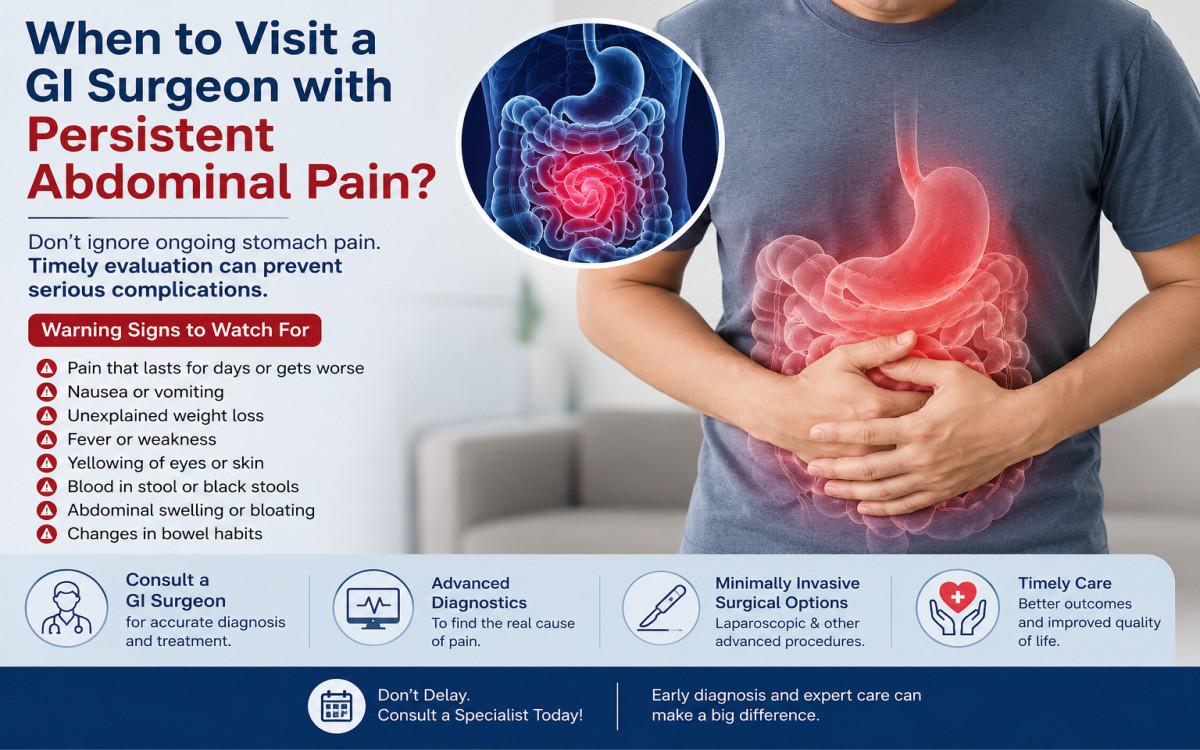
When Should Abdominal Pain Be Assessed by a Physician?
The intensity of the abdominal pain is not an indication of the severity of the underlying issue in most cases. Many diseases manifest mild or occasional symptoms when they are in their initial stages.
You need to think about a visit to a doctor if you experience abdominal pain:
That persists for a number of days and does not get better
That reoccurs for weeks or even months
That gets worse with time
That hinders your normal functioning or sleeping
That recurs after consuming meals
That is combined with recurring nausea or vomiting
That is combined with unexpected weight loss
That is coupled with fever or severe weakness
That is combined with yellow eyes or skin
That is combined with blood in stool or black stools
That is coupled with constant abdominal distention
That is combined with alterations in bowel movements
This does not necessarily mean that the underlying issue requires surgery. It just means that the condition needs to be identified before treatment of the symptom continues.
What Are the Common Reasons for Chronic Abdominal Pain?
There are several potential sources of abdominal pain. Information such as the location, duration, and nature of the pain can be valuable to a doctor.
Gallbladder Conditions
One common reason for recurrent upper abdominal pain is gallbladder disease. Gallstones may at times cause pain after eating, especially after large meals.
Individuals with gallstones may not have any symptoms, but they may develop recurring bouts of pain. Complications can arise when gallstones block the bile ducts or result in inflammation.
An abdominal ultrasound is often conducted in cases of suspected gallbladder diseases.
Liver-Related Diseases
The liver lies in the upper right side of the abdominal cavity. Some liver-related diseases may be associated with pain and fullness in this area.
Yet, many liver diseases do not have any clinical symptoms in their initial stages. Liver function test abnormalities, presence of jaundice or imaging abnormalities may need to be further evaluated by a liver specialist delhi.
Treatment will depend on the particular disease and its severity.
Pancreatic Diseases
The pancreas lies behind the stomach and is responsible for digestion and regulation of blood sugar levels.
Diseases of the pancreas can result in upper abdominal pain that may radiate to the back. Acute pancreatitis can present with sudden, acute pain and should be urgently evaluated.
Persistent abdominal pain must not be treated with painkillers until the cause is determined.
Diseases of the Stomach and Intestines
Many stomach and intestine diseases may cause recurrent abdominal pain. Gastritis, peptic ulcer, inflammatory bowel diseases, intestinal obstruction and infections are among such diseases.
Some diseases can be treated with medications and diet modification, other ones require endoscopic or surgical treatment.
When To See A GI Surgeon?
There are various cases where the symptoms, clinical examination, or tests indicate that the patient might need a surgical procedure, in which case one must consult a GI Cancer Surgery Doctor Greater Noida .
The diseases managed by GI surgeons include those that affect:
Stomach
Intestine small
Large intestine
Liver
Gall bladder
Bile ducts
Pancreas
Appendix
Abdominal wall
One can see a GI surgeon if imaging studies reveal any gallstone, anatomical problem, suspicious mass or other disorders that might need surgery.
One can also get a surgical consultation if there are ongoing symptoms despite optimal medical treatment or if there are other GI problems needing further management.
It should be noted that just because the patient sees a surgeon, doesn’t mean he needs a surgery. The surgeon will first assess the disease and will discuss what is needed - observation, drugs, more tests, less invasive procedure, or surgery.
When should you never ignore warning signs?
Some symptoms related to abdominal pain call for medical intervention.
These may include:
Intense or Sudden Abdominal Pain
Sudden severe pain in the abdomen could be a symptom of a serious condition which requires urgent medical attention.
Vomiting
Vomiting could lead to dehydration and could be a symptom of many different digestive problems.
Jaundice
A yellowish tinge in your skin or eyes could mean a problem related to the liver, gallbladder, or bile ducts.
Unexplained Weight Loss
Weight loss accompanied by digestive problems warrants medical attention.
Blood in Stools
Blood in stool or black, tarry stools must not be overlooked, especially when abdominal pain is experienced as well.
Abdominal Swelling
Abdominal distension or swelling might indicate a number of potential causes and need to be investigated if persists or increases.
What Tests Are Done to Investigate Persistent Abdominal Pain?
First of all, a detailed conversation regarding symptoms is needed.
A doctor will ask for:
Where the pain appears
How long ago did it start
Its duration
Before or after meals
If it radiates to another area
Presence of vomiting, fever, weight loss
Any changes in defecation/urination routine
History of abdominal operations and illnesses
Depending on the symptoms, further investigation might be recommended.
These could include:
Blood test
Liver function tests
Ultrasound of abdomen
CT-scan
MRI or MRCP
Upper GI endoscopy
Colonoscopy
Other special investigations
It is not only to diagnose an illness, but also assess its severity and choose proper treatment strategy.
Abdominal Pain Treatment without Surgery?
Yes. Surgery does not have to be the treatment for all abdominal problems.
According to the diagnosis, some possible treatments are:
Medications
Changes in diet
Changes in lifestyle
Treatment of infections
Treatments for digestive problems
Endoscopy
Monitoring
However, surgery is usually considered when it is unlikely that a certain condition will be improved with conservative treatment or when complications arise.
When Can Laparoscopic Surgery Be Performed?
For certain gastrointestinal conditions, Laparoscopic Surgery Doctor in Greater Noida may be used.
Laparoscopic surgeries are done through small cuts by use of camera and surgical instruments designed for that purpose. In some cases, depending on the type of surgery and general health of the patient, minimally invasive surgery may provide some advantages over traditional surgery such as small incisions, less pain, quicker recovery and other.
Laparoscopic surgery is usually done during several types of abdominal surgeries such as certain gallbladder and intestinal surgeries.
But this surgery can’t be done for everybody because the type of surgery depends on many factors such as disease, severity, previous surgeries and others.
Why Is Early Evaluation Important?
There are many cases of abdominal illnesses that become easy to treat at an appropriate point in time.
For instance, gallbladder pain might develop complications in the future. Moreover, any digestive problems can lead to the need for a doctor’s examination and ruling out more serious gastrointestinal illnesses.
Early evaluation doesn’t necessarily mean the need for additional tests and surgeries; rather, it determines whether the patient has a simple digestive disorder or requires further assistance from specialists.
It is not worth continually consuming pills due to unidentified pain.
Things That You Can Do Before Visiting a Specialist
It is important to write down:
Times when you experience pain
Foods which cause pain
Location and intensity of pain
Vomiting or fever
Recent changes in weight
Changes in the frequency of bowels movements
Previous reports from the clinic
List of medications you are currently taking
This will help your physician learn about the pattern of your symptoms.
Patients who find it hard to visit a specialist right away could try out a book appointment Dr Amit Jain Max Hospital service to talk to a doctor regarding their symptoms and find out whether it's worth visiting a hospital.
Frequently Asked Questions
1. When do I need to see a GI surgeon for my abdominal pain?
You will need to see a GI surgeon if you have abdominal pain that is continuous, recurring, intense or accompanied by signs such as vomiting, jaundice, unexplained weight loss, bleeding, abnormal investigations or any gastrointestinal condition needing surgery.
2. Do I need to undergo surgery if I visit a GI surgeon?
No. Visiting a GI surgeon means a detailed evaluation of your symptoms and investigations in order to see what type of management your condition needs - medications, monitoring, procedures or surgery.
3. Can gallstones lead to recurrent abdominal pain?
Yes. Recurrent abdominal pain can be caused by gallstones, especially after eating. In case gallstones become symptomatic or develop complications, surgery may be considered.
4. Are there liver diseases that can cause abdominal pain?
Yes. Some liver diseases can lead to abdominal pain located in the upper right side of the abdomen, however many liver diseases do not present any symptoms at the beginning of their course.
5. Which tests would be needed in case of prolonged pain in the abdomen?
It depends on the symptoms you have and the doctor may advise the following tests: blood tests, ultrasound, CT, MRI, endoscopy, colonoscopy or others. It depends on the cause of the pain.
6. Is it possible to use laparoscopy in all cases?
No. There are many cases when laparoscopy can be used but not always. The right surgical intervention will depend on the diagnosis and the severity of the disease.
7. Can the pain appear due to the problems with the pancreas?
Yes. Some disorders associated with the pancreas can lead to the upper abdomen pain that may sometimes spread to the back.
Conclusion
Pain in the abdomen may be caused by a number of factors, from mild digestive disorders to more serious issues needing specialist intervention. Pain location, duration, and other accompanying symptoms are just some of the ways of identifying the reason for such discomfort.
Should there be recurrent pain, severe pain, or the symptoms that are accompanied by vomiting, jaundice, bleeding, and/or unexplained weight loss, it would be best to consult a physician.
The consultation with a specialist will give an idea of whether the problem needs to be treated through medication, tests, minimally invasive procedures, or surgery. In addition, getting the correct diagnosis in time may save you from further unnecessary delays.