
Living Donor vs Deceased Donor Liver Transplant: What’s the Difference?
Published on 05 Jul 2026
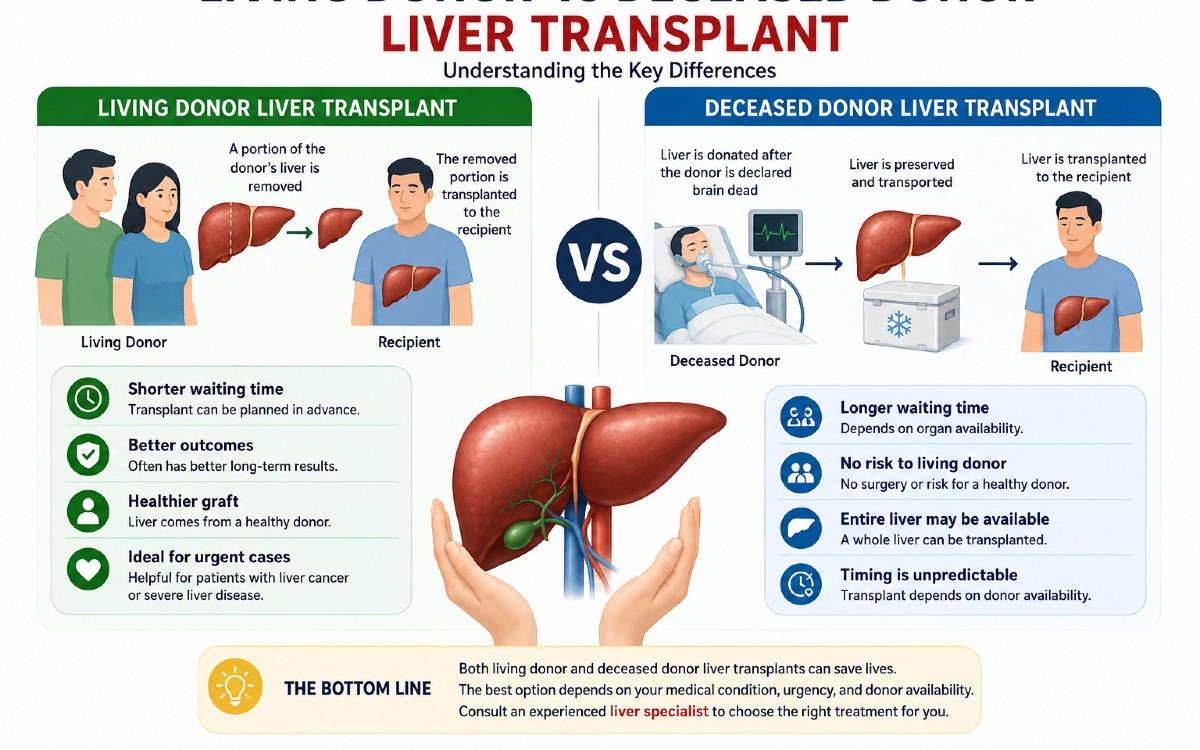
A liver transplant is a life-saving surgical procedure in which a diseased or damaged liver is replaced with a healthy liver from a donor. It is often recommended for patients with end-stage liver disease, acute liver failure, or certain cases of liver cancer when other treatments are no longer effective.
One of the most common questions patients and families ask is: Should we choose a living donor or a deceased donor liver transplant? Understanding the differences can help patients make informed decisions and prepare better for treatment.
If you are consulting a liver specialist in Delhi, knowing these options can help you discuss the most suitable treatment plan based on your condition.
What Is a Liver Transplant?
A liver transplant involves removing a diseased liver and replacing it with a healthy one. The liver is unique because it can regenerate itself, which makes both living donor and deceased donor transplants possible.
A transplant may be needed for conditions such as:
-
Liver cirrhosis
-
Chronic liver disease
-
Acute liver failure
-
Genetic liver disorders
-
Advanced liver cancer
The choice between living donor and deceased donor transplant depends on the urgency, availability of donors, and overall health of the patient.
What Is a Living Donor Liver Transplant?
A living donor liver transplant (LDLT) involves transplanting a portion of a healthy person’s liver into the patient. Usually, the donor is a close family member or someone with a compatible blood group.
Since the liver regenerates, both the donor’s remaining liver and the recipient’s transplanted liver portion can grow back to near-normal size within a few months.
How It Works
-
The donor undergoes medical evaluation.
-
Blood group and compatibility are checked.
-
A portion of the donor’s liver is surgically removed.
-
The portion is transplanted into the recipient.
-
Both donor and recipient recover under close medical monitoring.
Advantages of Living Donor Liver Transplant
-
Shorter waiting time
-
Surgery can be planned in advance
-
Better outcomes in many cases
-
Lower risk of disease progression while waiting
-
Especially helpful for urgent cases or liver cancer
Challenges of Living Donor Liver Transplant
-
Requires a healthy willing donor
-
Donor surgery carries risks
-
Higher emotional pressure within families
-
Complex surgical procedure
What Is a Deceased Donor Liver Transplant?
A deceased donor liver transplant (DDLT) uses a liver from a person who has been declared brain dead but whose organs remain healthy and suitable for donation.
These livers are allocated to patients on the transplant waiting list based on urgency, medical condition, and transplant criteria.
How It Works
-
The patient is registered on the transplant waiting list.
-
Medical priority is assessed.
-
A matching donor liver becomes available.
-
Transplant surgery is performed.
Advantages of Deceased Donor Liver Transplant
-
No risk to a living donor
-
Suitable for patients without eligible family donors
-
Entire liver may be available for transplant
Challenges of Deceased Donor Liver Transplant
-
Long waiting period
-
Risk of condition worsening during wait
-
Limited donor availability
-
Timing of surgery is unpredictable
This option can be difficult for patients with aggressive liver cancer because delays may impact treatment success.
Living Donor vs Deceased Donor Liver Transplant: Key Differences
|
Factor |
Living Donor |
Deceased Donor |
|
Donor Source |
Healthy living person |
Brain-dead donor |
|
Waiting Time |
Short |
Often long |
|
Surgery Planning |
Planned |
Emergency timing |
|
Availability |
Depends on donor match |
Depends on organ availability |
|
Risk to Donor |
Yes |
No living donor risk |
|
Best For |
Urgent cases, liver cancer |
Patients without living donor |
Which Option Is Better?
There is no single answer. The best choice depends on:
-
Severity of liver disease
-
Presence of liver cancer
-
Availability of a suitable donor
-
Overall health of patient
-
Urgency of treatment
For many patients with worsening liver disease or liver tumors, a living donor transplant offers faster treatment and better survival chances. A skilled liver specialist in Delhi can evaluate your condition and recommend the safest option.
Who Can Be a Living Liver Donor?
A living donor is usually someone who:
-
Is between 18–55 years old
-
Has good physical and mental health
-
Has compatible blood group
-
Has no major liver disease or chronic illness
Donor safety is always the top priority. Extensive screening ensures the donor can safely undergo surgery.
Recovery After Liver Transplant
Recovery depends on the patient’s condition and type of transplant.
Common Recovery Timeline
-
ICU stay: Few days
-
Hospital stay: 1–3 weeks
-
Initial recovery: 6–12 weeks
-
Full recovery: Several months
Patients need:
-
Regular follow-ups
-
Immunosuppressant medications
-
Healthy diet
-
Lifestyle modifications
Long-term success depends heavily on post-transplant care.
When Should You Consult a Liver Specialist?
You should consult a doctor immediately if you have symptoms such as:
-
Persistent jaundice
-
Severe fatigue
-
Abdominal swelling
-
Unexplained weight loss
-
Vomiting blood
-
Symptoms related to liver cancer
Early consultation improves treatment outcomes and increases transplant success.
If you are searching for a trusted liver specialist in Delhi, choosing an experienced transplant surgeon can make a major difference in diagnosis, surgery, and recovery.
FAQs
1. Is living donor liver transplant safe?
Yes, it is generally safe when performed at an experienced transplant center with proper donor evaluation.
2. Which transplant has better success rates?
Both living donor and deceased donor liver transplants have good success rates. Outcomes depend on patient condition, timing, and surgical expertise.
3. Can liver cancer patients undergo liver transplant?
Yes, selected patients with liver cancer may benefit significantly from liver transplant.
4. How long can someone live after a liver transplant?
Many patients live for 10–20 years or longer with proper care and regular follow-ups.
5. How quickly does the liver regenerate?
The liver can regenerate significantly within weeks and near-normal size within a few months.