
Robotic Rectal Cancer Surgery: Benefits, Procedure & Recovery Guide
Published on 11 May 2026
Introduction
Rectal cancer is one of the most serious digestive tract cancers affecting thousands of people every year. With advancements in medical technology, robotic surgery has become a revolutionary treatment option offering precision, safety, and faster recovery for patients suffering from rectal cancer.
Today, many patients prefer consulting a Robotic GI Cancer Surgeon Patparganj Delhi or a Robotic GI Cancer Surgeon Greater Noida for advanced minimally invasive treatment options. An experienced Oncologist Specialist in Greater Noida can help diagnose and manage rectal cancer effectively through personalized treatment plans.
This blog explains the benefits, procedure, risks, and recovery process of robotic rectal cancer surgery.
What is Rectal Cancer?
Rectal cancer develops in the rectum, the lower part of the large intestine. It usually starts as small non-cancerous polyps that may become cancerous over time.
Common Symptoms
-
Blood in stool
-
Constipation or diarrhea
-
Abdominal pain
-
Sudden weight loss
-
Weakness and fatigue
Early diagnosis improves treatment success significantly.
What is Robotic Surgery for Rectal Cancer?
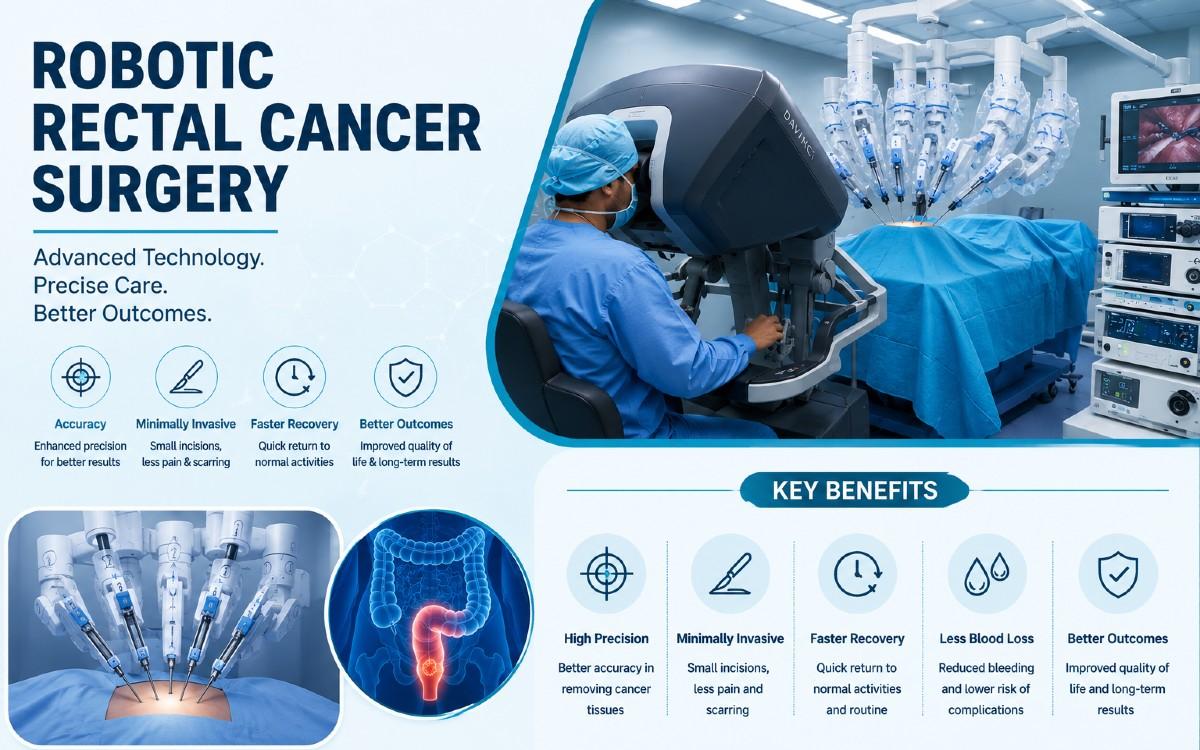
Robotic surgery is an advanced minimally invasive surgical technique where surgeons use robotic-assisted systems to remove cancerous tissues with high precision.
During the procedure:
-
Small incisions are made
-
Tiny robotic instruments are inserted
-
A high-definition 3D camera guides the surgeon
This technique allows better accuracy compared to traditional open surgery.
Patients often seek treatment from a Robotic GI Cancer Surgeon Patparganj Delhi or Robotic GI Cancer Surgeon Greater Noida for safer and more advanced surgical care.
Benefits of Robotic Surgery for Rectal Cancer
1. High Precision Surgery
Robotic systems provide enhanced visualization and precise movements, especially in delicate pelvic areas.
2. Smaller Incisions
Smaller cuts mean:
-
Minimal scars
-
Less pain
-
Faster healing
3. Faster Recovery
Most patients recover more quickly compared to open surgery.
4. Reduced Blood Loss
The minimally invasive approach reduces bleeding during surgery.
5. Lower Risk of Complications
Advanced robotic technology helps reduce risks like:
-
Infection
-
Tissue damage
-
Excessive bleeding
6. Better Quality of Life
Robotic procedures help preserve surrounding nerves, improving bowel, bladder, and sexual function after surgery.
Procedure of Robotic Rectal Cancer Surgery
Step 1: Diagnosis and Evaluation
Doctors perform:
-
Colonoscopy
-
MRI scan
-
CT scan
-
Blood tests
An experienced Oncologist Specialist in Greater Noida carefully evaluates the cancer stage before surgery.
Step 2: Anesthesia
The patient receives general anesthesia before the procedure begins.
Step 3: Robotic-Assisted Tumor Removal
The surgeon controls robotic arms through a console to remove the cancerous part of the rectum precisely.
Step 4: Reconstruction
Healthy bowel sections are reconnected to restore digestive function.
Recovery After Robotic Surgery
Recovery after robotic surgery is generally smoother than traditional surgery.
Patients may experience:
-
Less postoperative pain
-
Shorter hospital stay
-
Faster return to normal activities
Recovery Tips
-
Follow a healthy diet
-
Stay hydrated
-
Walk regularly
-
Attend follow-up appointments
Who Should Consider Robotic Surgery?
Robotic surgery may be ideal for patients with:
-
Early-stage or advanced rectal cancer
-
Obesity
-
Deep pelvic tumors
-
Complex colorectal conditions
Consulting a Robotic GI Cancer Surgeon Greater Noida or Robotic GI Cancer Surgeon Patparganj Delhi can help determine the best treatment approach.
Importance of Early Cancer Screening
Routine screening helps detect rectal cancer early before symptoms become severe. Colonoscopy and regular medical checkups are highly recommended for high-risk individuals.
An experienced Oncologist Specialist in Greater Noida can guide patients regarding preventive screenings and early diagnosis.
Conclusion
Modern robotic surgery has transformed the treatment of colorectal cancer by offering safer procedures, minimal pain, and quicker recovery. Choosing an experienced Robotic GI Cancer Surgeon Patparganj Delhi or Robotic GI Cancer Surgeon Greater Noida ensures access to advanced surgical care and better treatment outcomes.
Early diagnosis, expert consultation, and timely treatment play a vital role in improving survival and quality of life for rectal cancer patients.
FAQs
1. What is robotic surgery for rectal cancer?
Robotic surgery is a minimally invasive procedure used to treat rectal cancer with smaller incisions, less pain, and faster recovery.
2. Is robotic surgery safe?
Yes, robotic surgery is considered safe when performed by an experienced Robotic GI Cancer Surgeon Patparganj Delhi or Robotic GI Cancer Surgeon Greater Noida.
3. What are the benefits of robotic surgery?
Benefits include:
-
Faster recovery
-
Less pain
-
Minimal scars
-
Shorter hospital stay
4. How long does recovery take?
Most patients recover within a few weeks after robotic surgery depending on their health condition.
5. When should I consult an oncologist?
Consult an Oncologist Specialist in Greater Noida if you experience blood in stool, abdominal pain, or sudden weight loss.