When Do You Need Laparoscopic GI Surgery? Conditions, Benefits and Recovery
Published on 10 Aug 2026
Digestive system disorders could develop at any age and include anything from simple symptoms to more complex diseases that need surgical intervention. While most digestive system diseases could be managed with medication and change in lifestyles, there are others that might ultimately require surgery.
Recent advances in surgery have greatly revolutionized the management of many gastrointestinal disorders. One such popular procedure is Laparoscopic GI surgery that involves performing operations by making small cuts instead of just one major cut.
This method could be applied in many cases of gastrointestinal disorders based on different factors.
What Is Laparoscopic GI Surgery?
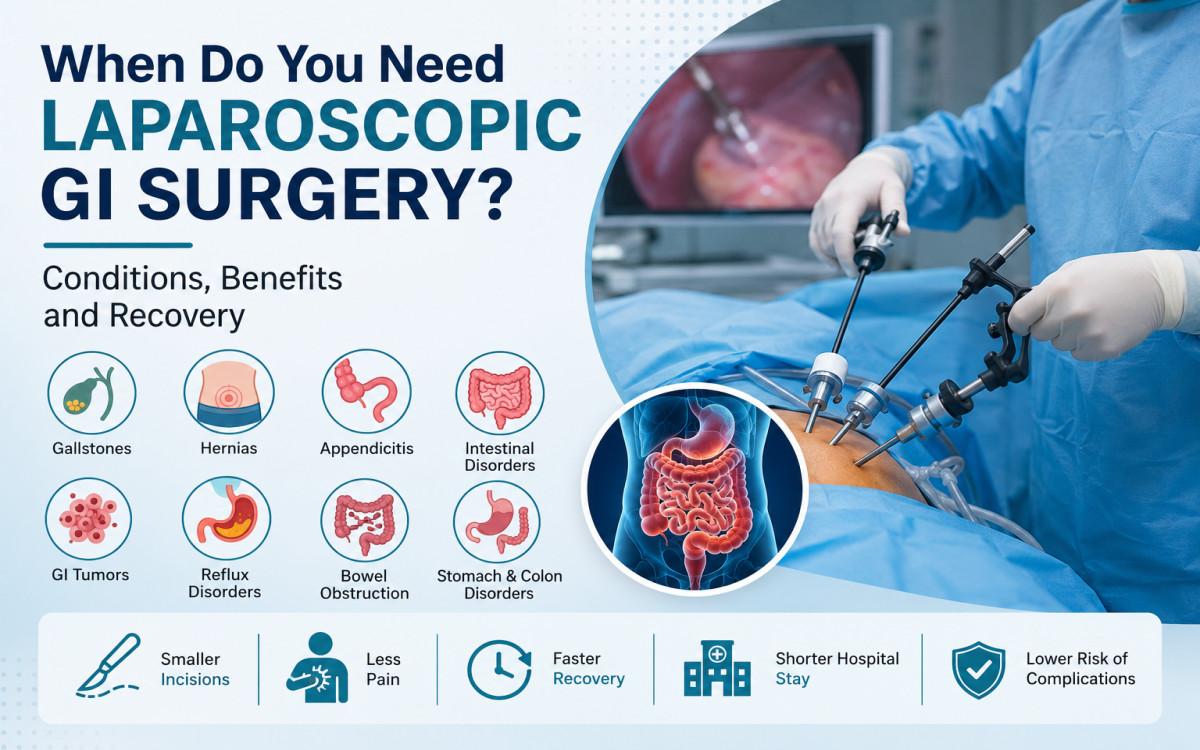
Laparoscopic GI surgery is a type of surgery performed to diagnose or treat different issues related to the gastrointestinal tract. In contrast to the open surgery that involves a major incision, several small incisions are created and a camera along with special surgical tools are inserted inside the body.
The use of a camera allows the surgeon to see the enlarged image of internal organs on the monitor.
When compared to the open surgery, laparoscopic surgeries can have some advantages like smaller incisions, lower levels of pain and scaring, as well as quicker recovery.
Not every patient or disease can be treated using laparoscopy. The type of the surgical technique depends on patient’s condition and his or her medical history.
When Are GI Surgeries Required?
There are several conditions that can be treated through GI surgeries in some cases depending on how serious the disease, symptoms, earlier treatment attempts, and test results are.
Conditions that can be treated through surgeries are:
Gallstones
Hernias
Appendicitis
Intestinal disorders
GI tumors
Serious cases of reflux disorders
Bowel obstruction
Stomach and colon disorders
It is essential to make an accurate diagnosis to determine if you need surgery or not.
Gallstones and Surgery for Gallstones
Gallstones are solid deposits or Gallbladder stones that can be found within the gallbladder. Whereas some people have gallstones without showing any symptoms at all, others can suffer from abdominal pain, vomiting, nausea, heartburn, or pain caused by eating fatty foods.
If gallstones cause recurring symptoms or cause complications like inflammation or infection, then surgery becomes necessary.
With the right patient, surgery can be done laparoscopically through small incisions. Typically, in surgery for gallstones, the removal of the gallbladder itself occurs, and not just the removal of gallstones.
Surgery for gallstones is best decided by an evaluation of the situation by a competent surgeon.
Definition and Cases of Surgery Needed for a Hernia
Hernia is defined as an instance whereby an organ or tissue protrudes from a weak spot within the tissue or muscle lining it. They occur at different sites in the body, such as the abdomen and groin region.
Initially, a hernia could only manifest itself in the form of a lump or slight pain. Pain, enlargement, inability to reduce the lump, and other complications might signify the need for consultation by a physician.
Hernia surgery may be required if the hernia causes complications, is big, or exhibits certain symptoms. Depending on the type and size of the hernia, the surgical procedure may be performed either through an open or minimally invasive surgery method.
The mode will be determined by a surgeon depending on various factors, including the physical examination and investigations of the patient.
Why Consider Minimally Invasive Surgery?
The primary reason why minimally invasive surgery became increasingly common is that it may help minimize the size of surgical cuts.
Some of the advantages that might be offered by laparoscopy include:
Small Cuts
Most laparoscopic operations involve making several small cuts instead of one big one. Consequently, smaller scars may occur.
Minimal Postoperative Pain
The use of smaller cuts during a procedure may lead to lower pain levels for some patients in comparison with traditional surgery.
Quicker Hospital Discharge
Laparoscopic surgery may permit hospital discharge for some patients faster depending on the operation and recovery period.
Rapid Recovery of Normal Activity
Many people are able to return to their daily activities relatively quickly following the minimally invasive operation, though individual recovery time is different.
Lower Risk of Some Wound Problems
Using smaller cuts during a procedure may help avoid certain problems related to the wound; however, all operations have risks.
One must remember that these potential benefits will not be provided to each and every patient since there are many factors affecting the individual recovery process.
When to Visit a GI Surgeon?
It is time to visit a GI surgeon when you experience some digestive problems or a disease requiring surgical treatment.
The symptoms that need attention from a doctor are:
Persistent abdominal pain
Frequent vomiting
Painful bulge in the abdomen or the groin area
Frequent attacks of gallstones
Trouble passing stool and gases
Unexpected weight loss
Stool with blood
Digestive complaints
Strange results on imaging studies
In case you are looking for a gi surgeon in delhi, find an experienced one who will help you understand what you need – surgery, medicines, observation, or something else.
How Is Laparoscopy Done?
Prior to surgery, the patient is subjected to a medical examination. In line with the health condition of the patient, the doctor recommends blood tests, ultrasound, CT scan, endoscopy, and other forms of diagnostic tests.
In a laparoscopic surgery, the patient is subjected to general anesthesia. Small cuts are made in the body to allow the insertion of camera and other surgical instruments.
Using the surgical instruments and the images provided by the camera that can be seen on the monitor, the surgeon carries out the necessary operation.
After surgery, the patient is observed for recovery. The stay at the hospital depends upon the nature of the surgery.
Recovery After Laparoscopic GI Surgery
This process will vary based on the surgery performed.
After the operation, patients are often recommended to:
Adhere to the surgical dietary recommendations
Keep the wounds from the operation clean and dry
Take the prescribed medicines
Avoid any strenuous activity until advised
Visit for follow-ups
Resume physical activity gradually
Inform the medical personnel about any abnormalities
Some mild pain, tiredness, or constipation can be experienced after an operation, based on the type of operation. Nevertheless, any intense pain, continuous vomiting, fever, bleeding, or wound infection symptoms should immediately be reported to the medical personnel.
Can Everyone Undergo Laparoscopic Surgery?
A laparoscopic surgical procedure is not necessarily the best one for all patients.
There are various factors to consider when deciding whether to opt for laparoscopic or open surgery, including:
Nature of illness
Severity of the disease
Previous abdominal surgery
General health
Complications
Size and location of the condition
Assessment by the surgeon
Sometimes, there are situations that make it safer to undergo open surgery than laparoscopic surgery.
What Are the Preparations for GI Surgery?
When surgery is advised, the doctor will inform the patient about the necessary preparations before the operation. They can involve fasting for some time, modifying medications, taking blood tests, and performing more diagnostic procedures.
It is important to give the doctor full information about current illnesses, allergies, medications, and past surgeries.
Knowing what will happen helps to decrease the level of stress and prepare for the recovery period.
Frequently Asked Questions (FAQs)
1. What is laparoscopic GI surgery?
Laparoscopic GI surgery is a minimally invasive form of surgery that is used to manage some gastrointestinal problems. This form of surgery involves making small cuts into the body through which a camera and surgical tools are inserted.
2. For what diseases can laparoscopic surgery be applied?
It can be done to deal with gallstones, hernias, appendicitis, and other conditions related to the gastrointestinal tract. The type of procedure will depend on the patient's condition.
3. In what situations is surgery for gallstones recommended?
When gallstones lead to recurrent pain, infections, inflammations, or any other health issues, then the doctor may recommend surgery. It depends on the patient's symptoms and test results.
4. Can laparoscopic surgery be used for treating a hernia?
Yes, laparoscopy is one of the methods that can be used for hernia treatment. However, the right surgical technique will depend on the kind of hernia.
5. What are the advantages of laparoscopic GI surgery?
Potential benefits include smaller incisions, reduced scarring, less postoperative discomfort, shorter hospital stays in suitable cases, and a faster return to normal activities.
Conclusion
Laparoscopic surgery has emerged as one of the significant methods that is employed to treat various gastrointestinal diseases. With the use of smaller incisions and advanced tools, surgeons are able to conduct different procedures, thereby lowering possible pain and recovery after the surgery for the selected individuals.
In case of persistent problems such as gallstones and hernia, a surgical intervention might be required. Nonetheless, surgery cannot be considered for every individual, and the treatment decision should be based on the medical examination results.
If you suffer from constant abdominal pains or were diagnosed with gastrointestinal diseases, it would be beneficial for you to contact a professional surgeon. Thus, the evaluation will help you determine your problems and find the best solution.